

Windows
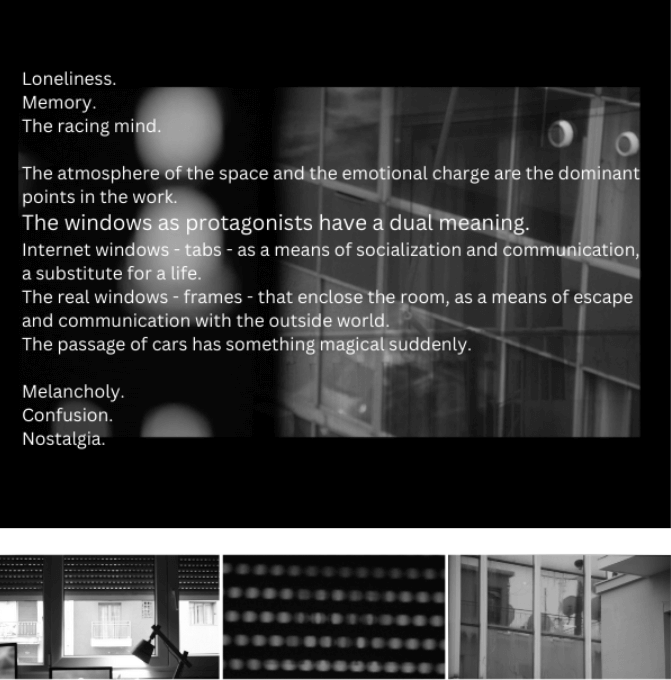
The atmosphere of the space and the emotional charge are the dominant points in the work. The windows ας protagonists have a dual meaning. Internet windows - tabs ας a means of socialization and communication, a substitute for a life. The real windows - frames - that enclose the room, ας a means of escape and communication with the outside world. The passage of cars has something magical suddenly.
Related Works
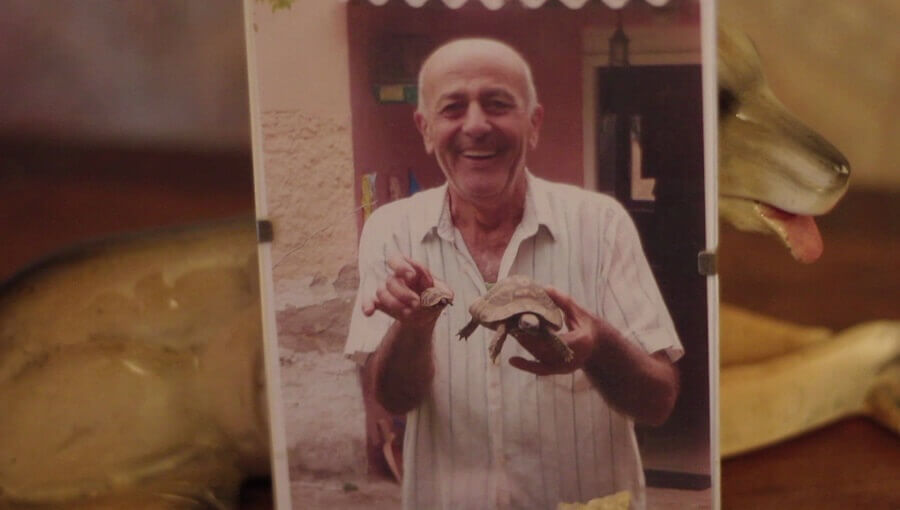
A short documentary, based on the theory of Observational Cinema. It is the portrait of the caretaker of the British Cemetery in the island of Corfu, Greece, Mr. Yorgos Psailas. The documentary deals with his daily life in the cemetery. Mr. Psailas also recounts the most important moments of his life as well as his thoughts about life and death.
Creation of a group installation entitled Intersecting Worlds. The installation raises questions about the diversity and dynamics of the digital world, the limits and possibilities of technology and how it interacts and transforms contemporary life, creating new stimuli and a new way of looking at everyday life.
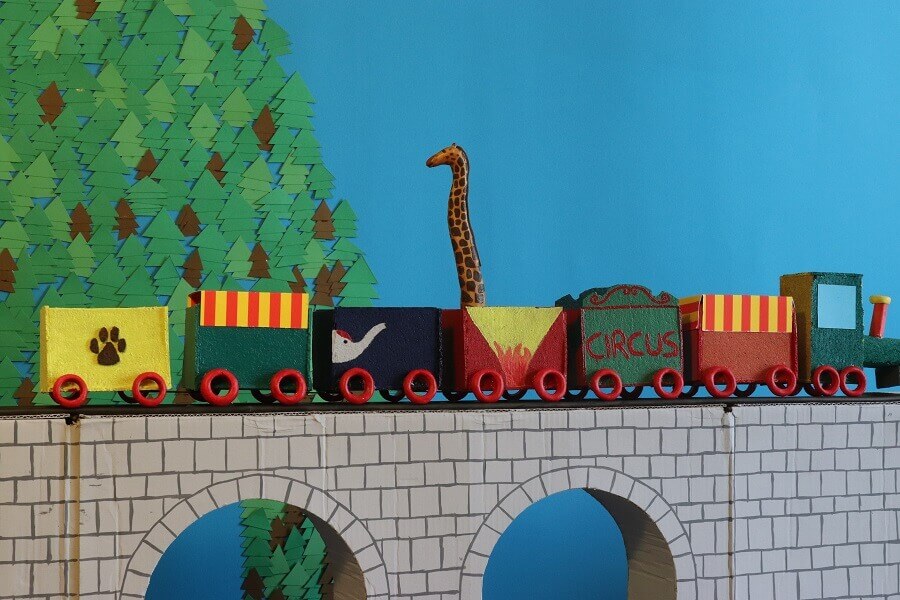
The project is the animation of the fairy tale "The chained elephant". "The Chained Elephant" is one of the stories of psychiatrist Jorge Bukay from his book "Let me tell you a story" which he tells to his client. It refers to a child' s question who notices that a huge circus elephant remains tied to a small stick without trying to free itself and without protesting. The circus elephant remained tied to his tiny stick because "the memory of the weakness he felt shortly after his birth is etched in his memory."
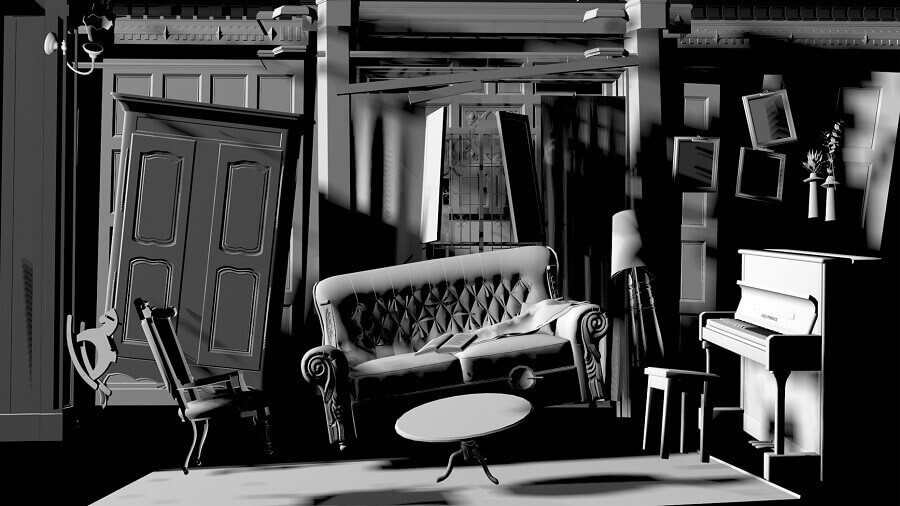
Where do memories go when they are lost? Are they still where we left them, if we don’t recall them? In this room, as private and irrevocable as our memory, objects animate a series of scenarios. A memory floods the room, another struggles to disclose itself, another one leaks back and forth in time. The idea of the ‘other’ hovers between what has already passed and what is reminisced every time. We never recollect events and spaces as such. We always enliven recollections in our own way. Through constant evocations that seek to perpetuate the existence of the ‘room’, memories converse with space and time, as well as with a part of ourselves. Either as past, forgetfulness or loss, they always contain something that is already gone.
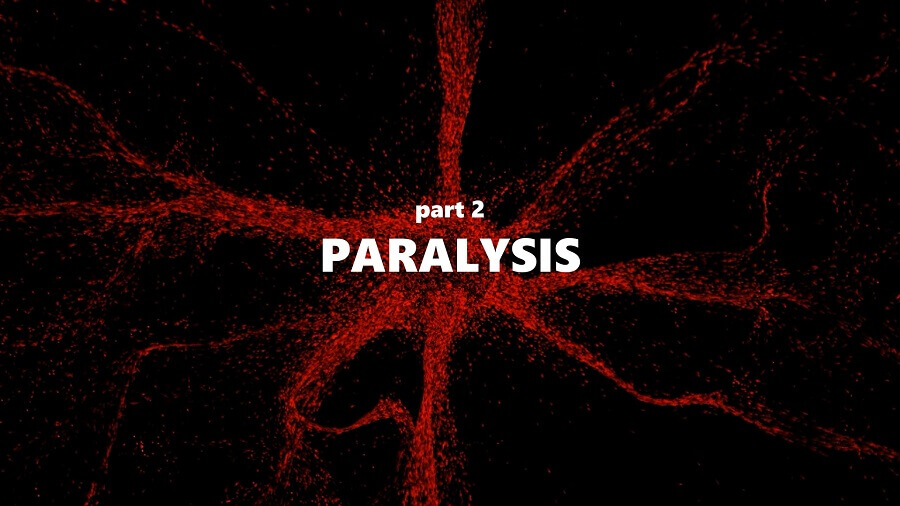
The audiovisual work "Paralysis by Analysis" presents a combined experience that unfolds in two chapters of two and three dimensions respectively.
The cinematic portrait of a visual artist, Demetris Papazachos, a senior student of the Fine Arts School in Thessaloniki, is about featuring an artist without just showing his artwork but emphasizing at his personality and his artistic thinking instead. Through his internal journey, gay culture elements are projected while an interesting question is raised: Who is "A Visual Artist" at last?
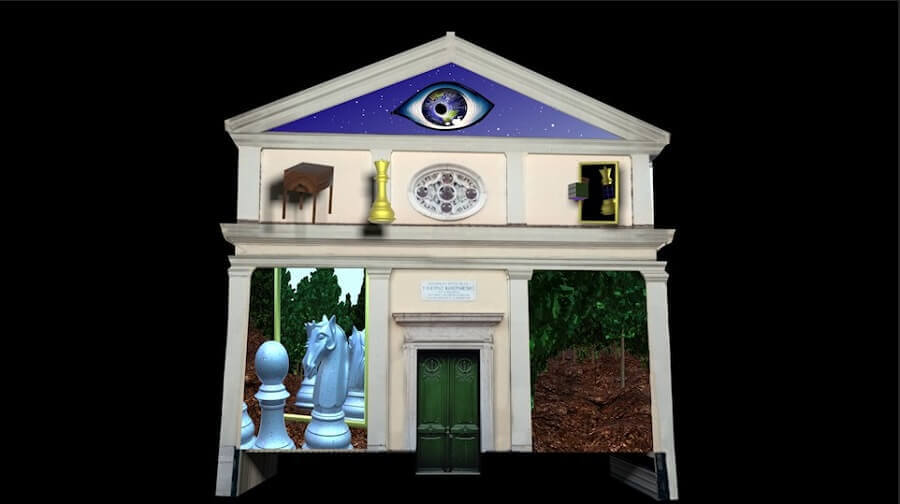
Presentation of 3d projection mapping, on Church of Panagia ton Xenon, Kyra - Faneromeni (Old Town, Corfu, Greece), October 2, 2020 at 10:00.
In the dissertation, following the strategy of deliberate ambiguity and crossing different eras, we go through a path of images and information, which express hope and fear in various fields and they characterize every culture and every society.
At the same time, moving from formalism to realism, it emerges that the Aristotelian definition of the representational unity of space-time-action is no longer valid in art. Undoubtedly, the formalist movement has shown that planes are understood not only as sequences of logical units, but also as theoretical or ideological conceptions, where their connection is not legitimized on the basis of the principle of space-time unit, but by some abstract theoretical model, such as is the model of metaphor, the path through contradictions, symbolism and anything else that enhances the removal of the theoretical model. But also internal realism, which is not a theory of truth, highlights the convergence of two seemingly incompatible ideas.
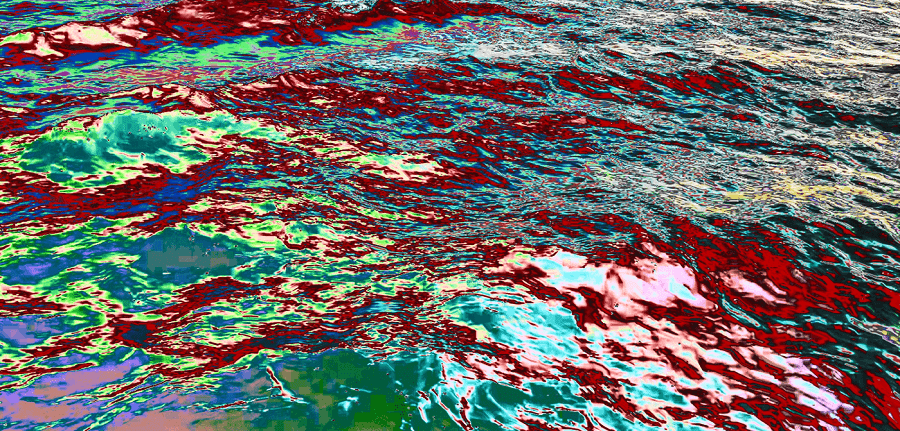
This art piece is trying to express the struggle between letting go ας one would use nature for meditative reasons and the over controlling mind fixating on patterns deriving from sea foam lines.