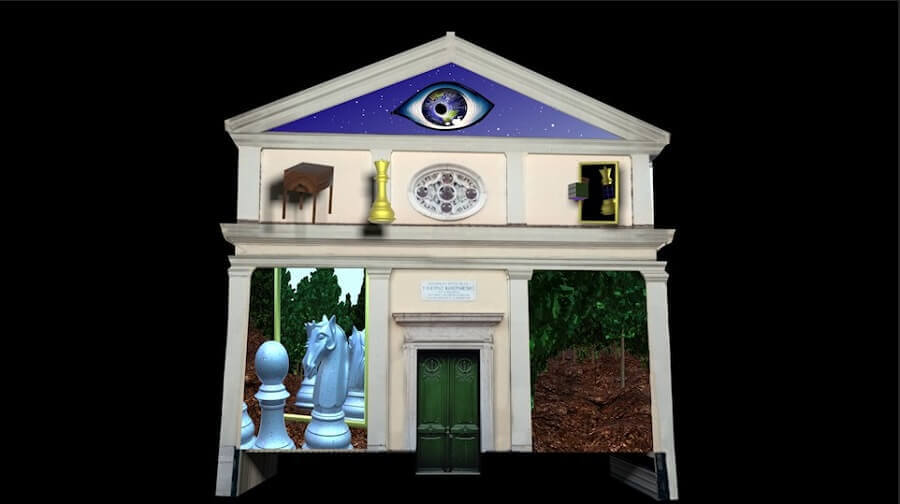

EX-SITU [existing situations]. Destruction as an social-artistic practice.
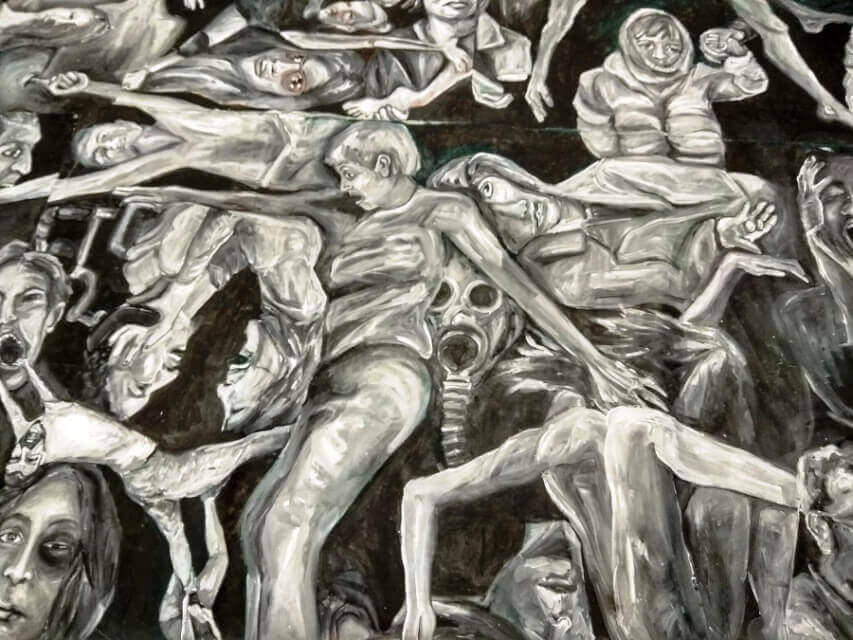
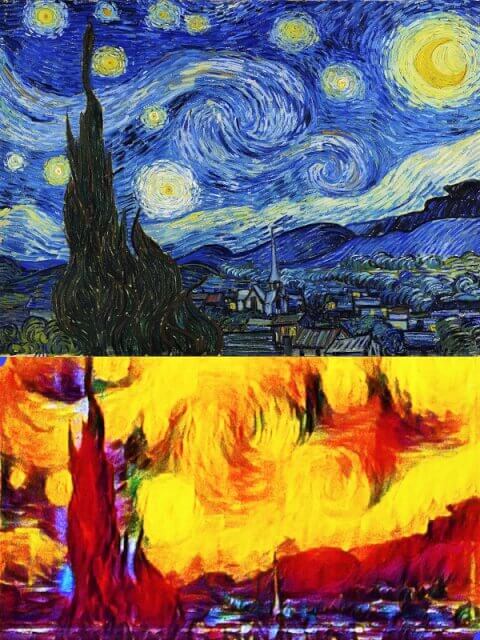
EX-SITU[existing situations] is an interactive installation that incorporates a computer, sound, and lighting technologies in which users/ viewers take part in the destruction of the painting by stepping on it. At the same time, a motion tracking system marks visitors and a light spot tracks them.
The content of EX SITU calls for awareness of social indifference, self-promotion, and their impact on society. The structure of EX SITU is intentionally ambiguous, revealing the obsession/fascination for the protection of material in contrast with the empathy for other people.
The interactive installation underlines the responsibility of individuals in society. The theoretical part analyses the Destruction in Art Symposium in 1966 and The bystander effect, or bystander apathy, in which individuals are less likely to offer help to a victim when other people are present.
Developer: Kostas Tsioutas
Related Works
The fulfillment of a last wish leads Filippo to a retrospection from the mountains of Epirus to the recent past of the year 1945. His meeting with his history revives the memory of a whole village, unfolding the relations and the bonding of two peoples against the commands of an era, which is not as far as we think.
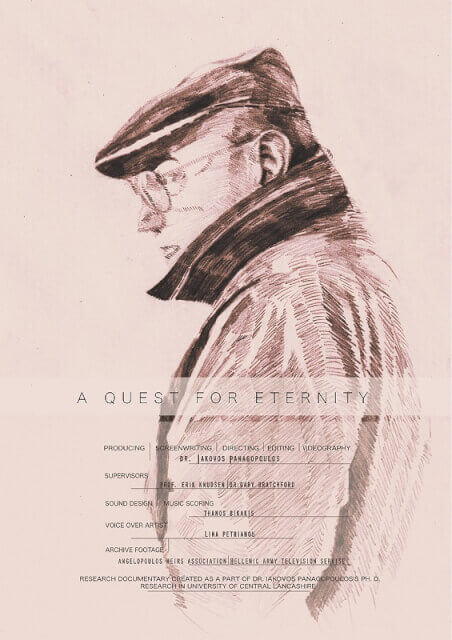
The quarantine's experience time has functioned as a humanized time. Its previous social barbarity was imprisoned in the familiar cage of my soul and became my creation time. Each day was my friend, an eternal circular and dynamic present, a consciousness without conflicts. It was like an eternity that is experienced differently every moment. An unprecedented form of stillness gripped me and perpetuated in many abstract fragments which finally formed the new texture of my existence, in this peculiar isolation. I became from the carcass of time I was before, its qualitative disintegration… Reality was distorted and experienced illusively. The time from the alienation that was before, was transformed and became the cover for the scratched truth of myself. This kind of time my conscience had dreamed to live.
Zoe is a 25 year-old student, living in Corfu island, Greece with her only friend and roommate Anne. Waking up late an afternoon Zoe realises that her friend is missing and she goes out at night alone in search of her. The strangely empty and quiet town, a series of bizzare events and the sense that she's been followed gives her the realization that something strange is going on and her eager to find her friend grows stronger.
At that time she comes across a dark human figure that wants to capture her. Trying to escape, Zoe ends up in a white room with nothing but a mirror inside.
As she walks closer to the mirror she sees that someone is trapped inside a room. Thinking that it's her friend Anne she reaches and goes through the mirror into that other room.
As she sits down next to the other person, thinking that she is Anne, she realizes it's her own self. In a desperate and decisive moment she tries to save her double, only to realize that her double can not cross to the other side of the mirror. Realizing that there's no way out the double lets go of Zoes hand.
Zoe wakes up in her room in the morning, gets dressed and goes for a walk by the sea in the now fully alive and noisy town. As she stands and stares at the waves she meets a girl named Anne sitting nearby. After the two girls meet they sit by the sea talking.
While we dream, much of the information that the brain involuntarily collects during the day, is intersected and integrated with previous experience and can be used in future behaviors.
A short documentary, based on the theory of Observational Cinema. It is the portrait of the caretaker of the British Cemetery in the island of Corfu, Greece, Mr. Yorgos Psailas. The documentary deals with his daily life in the cemetery. Mr. Psailas also recounts the most important moments of his life as well as his thoughts about life and death.
This art piece is trying to express the struggle between letting go ας one would use nature for meditative reasons and the over controlling mind fixating on patterns deriving from sea foam lines.
With the opportunity of the preparation of the trip, the productive process of maintenance, repair and work in the area of the shipyard, the project "Forest of Winds" is created. The project was named "Forest of Winds" because of the sound of the wind passing through the masts of the boats. The "Forest of Winds" is a 360 video animation evolving into a theatrical space and indefinite time. The video depicts the invisible side of a dream, the dream of a journey and its preparation with the forms of workers hovering impersonal in space as work uniforms, creating a choreographed kinesiological narrative process. The forms of workers rub, shine and accomplish all kinds of jobs with their repetitive motions, until they are left in space like objects in an endless free fall.
Myths are living stories that grow with time, change, adapt, but continue being a source for research, inspiration and creativity. The interactive audiovisual theatrical performance INRIRI questions the adaptation of an archetypal myth at a time of many dimensions and levels with elements from physical theater and embedded interactive technology in the performing space. Parts of the story are a Caribbean myth which transforms the body, a woodpecker and some new experimental technologies. On stage two bodies try to communicate with themselves and the environment around them and to discover anew what a body can be, what the relation and connection with the other body and which are the influences of the surrounding space on them.
A documentary about Lazaretto, the desert islet near the city of Corfu that functioned for centuries as a quarantine station as well as a place of execution for political prisoners during the Greek Civil War. The identity of the place is approached through fragmentary testimonies and original sources.