
A Quest For Eternity

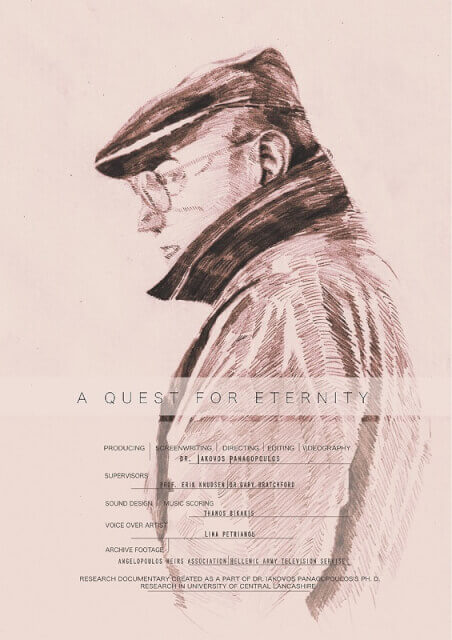
The research documentary A Quest for Eternity (2020) focuses in four different elements of Angelopoulos’s style and provides new information using and analysing the data from semi-structured interviews. This research documentary is part of Dr. Iakovos Panagopoulos practice based Phd research in the University of Central Lancashire with the title: “Reshaping Contemporary Greek Cinema Through a Re-evaluation of the Historical and Political Perspective of Theo Angelopoulos's Work”(Panagopoulos, 2019).
Producing-Screenwritting-Directing-Editing-Videography: Dr. Iakovos Panagopoulos Supervisors: Prof. Erik Knudsen Dr. Gary Bratchford Sound Design&Music Scoring: Thanos Bikakis Voice Over: Lina Petrianou Subtitles: Stavros Kozobolis Iralia Kotsakidou Archive Footage Used: Theo Angelopoulos Heirs Association Hellenic Army Television Service
Related Works
Paraphrase, reference of the title to the depression caused by the shocking images of drowned children in the Mediterranean, the watery grave of persecuted refuges.
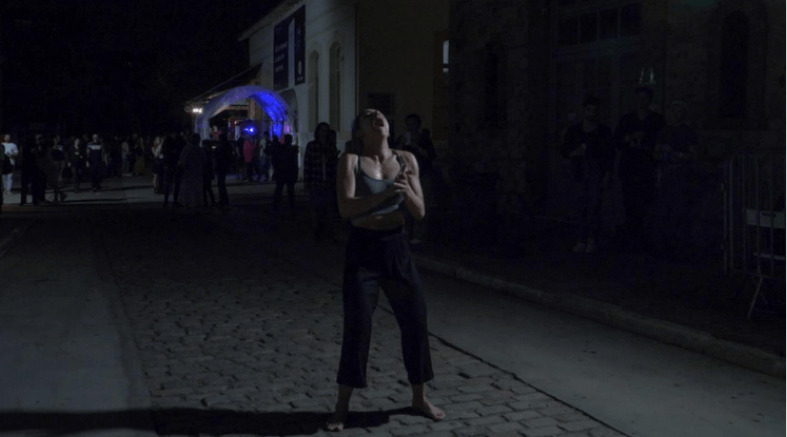
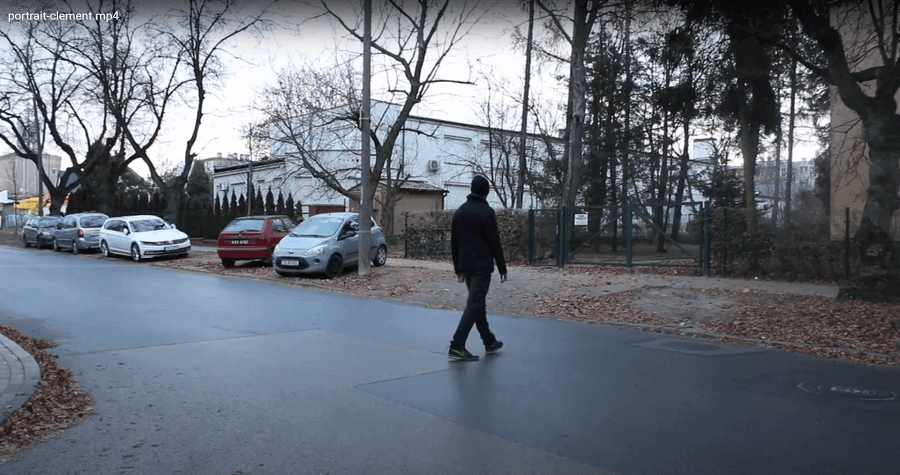
This changing frame represents an allegorical image of human nature, which when it is in dialectic with the outside world - during the transition from private to public life, experiences conflicting feelings of apprehension, anticipation, reticence, curiosity and extroversion.
In the realm of acoustic hyper-reality we meet aural simulacra of the order of maleficence. These are signals that mask and denature a profound acoustic reality. They are referential and representational, but in a way that they dissimulate reality and become its twisted Doppelgängers. Simulacra of the order of maleficence are perversions of reality. With the sound artwork ‘Natural Perversion’ Through a set of sonic processes the artist delves into autogenerative, autopoietic, responsive and biomimetic modes of creation exploring how the original naturally produced audio signal can be transformed into a sonic caricature and depending on the way it balances between its signifier and its signified aspect, it may re-interpret naturally produced concrete audible events into a musical language which serves both the acousmatic and the non-cochlear approaches to contemporary sound art.
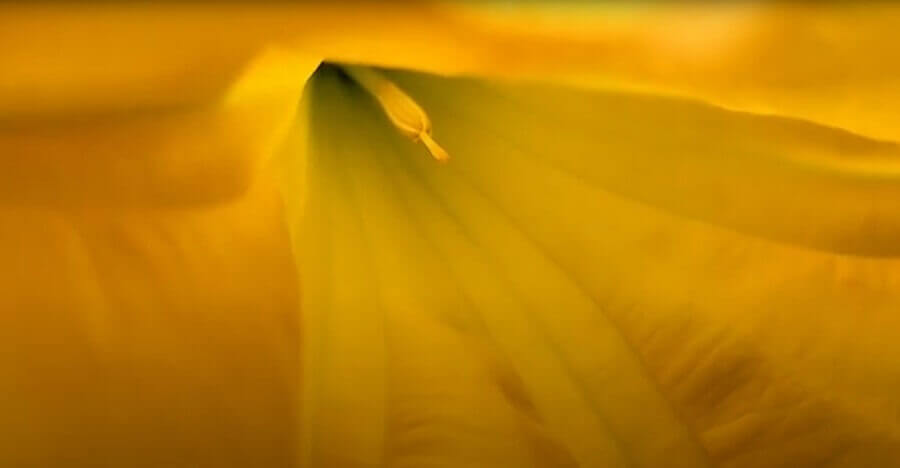
The project focuses on close-ups of flowers ας elements of the beauty of nature and the spiritual uplift created by the connection with it.
As Vincent van Gogh's "Starry Night" is one of my favorite paintings, I created an acoustic composition with the main goal of creating an atmosphere with a freer and more abstract approach. The small touches, the colors, the swirling flow, the natural landscape of the painting and the psychosynthesis of the artist are captured. The piece in combination with two images consists of three parts. In the first part, the night landscape is presented, in the second the intense emotions of the artist and in the third the nature with its power that calms the human soul.
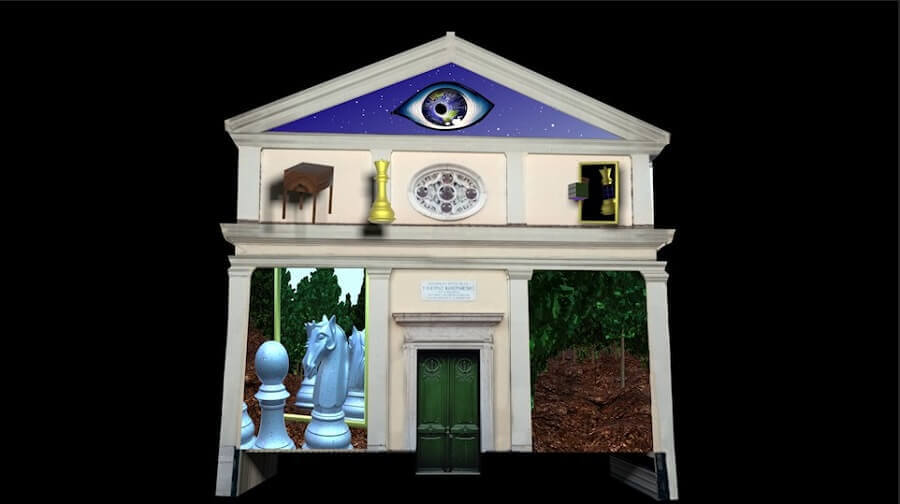
Where do memories go when they are lost? Are they still where we left them, if we don’t recall them? In this room, as private and irrevocable as our memory, objects animate a series of scenarios. A memory floods the room, another struggles to disclose itself, another one leaks back and forth in time. The idea of the ‘other’ hovers between what has already passed and what is reminisced every time. We never recollect events and spaces as such. We always enliven recollections in our own way. Through constant evocations that seek to perpetuate the existence of the ‘room’, memories converse with space and time, as well as with a part of ourselves. Either as past, forgetfulness or loss, they always contain something that is already gone.
The subject of Charis Myrsilidi’s thesis concerns the transfer of literary text to image. The excerpts of the selected texts are stories from the Grimm brothers' fairy tales and the connecting link is the pattern of transformation (metamorphosis). The presentation of the practical part of the thesis concerns an installation with clay sculptures, sound track and lighting. The sculptural space is formed by Charis Myrsilidi, a student of the Department of Audio Visual Arts and the sound by the composer Ioannis Konsolakis.
With the opportunity of the preparation of the trip, the productive process of maintenance, repair and work in the area of the shipyard, the project "Forest of Winds" is created. The project was named "Forest of Winds" because of the sound of the wind passing through the masts of the boats. The "Forest of Winds" is a 360 video animation evolving into a theatrical space and indefinite time. The video depicts the invisible side of a dream, the dream of a journey and its preparation with the forms of workers hovering impersonal in space as work uniforms, creating a choreographed kinesiological narrative process. The forms of workers rub, shine and accomplish all kinds of jobs with their repetitive motions, until they are left in space like objects in an endless free fall.