

Yorgos Psailas - A portrait of the British Cemetery caretaker
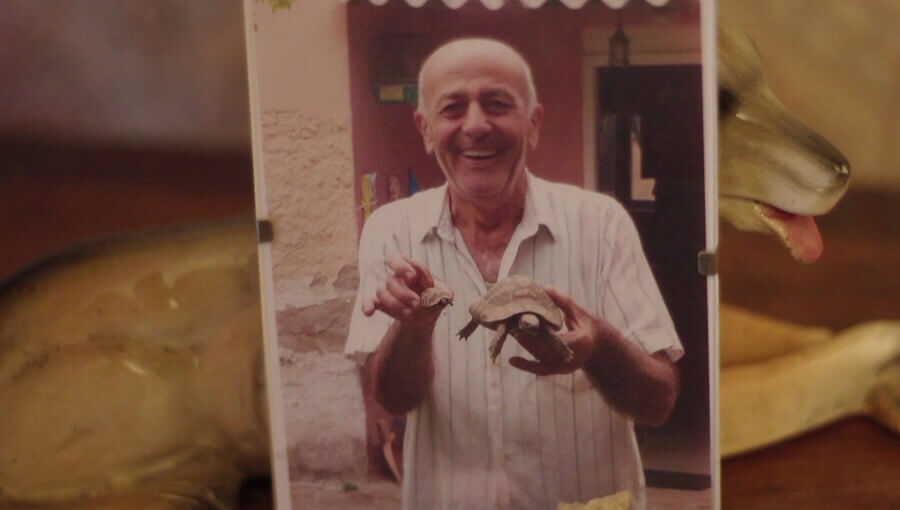
A short documentary, based on the theory of Observational Cinema. It is the portrait of the caretaker of the British Cemetery in the island of Corfu, Greece, Mr. Yorgos Psailas. The documentary deals with his daily life in the cemetery. Mr. Psailas also recounts the most important moments of his life as well as his thoughts about life and death.
Direction / Photography / Sound / Editing: Mixing: Andreas Vouliakis Translation from Italian: Athanasia Liatsi Ionian University Faculty of Music and Audiovisual Arts – Department of Audiovisual Arts Supervisor: Maria Chalkou
Related Works
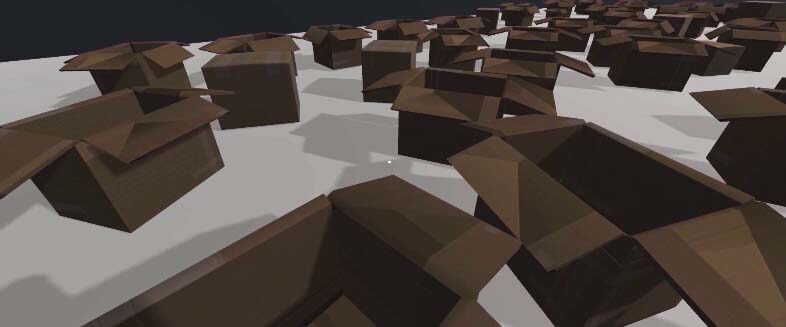
One week in ten minutes is a video in which the recording of unboxing, the act of opening the boxes, confronts the viewer with the repeated search in empty boxes that contain absolutely nothing. Each box is the promise of a gift which is to come, promising a gift whose dispatchment is always deferred.
Artist Paris Chatzigiannis, in his studio, talks about his life with painting.
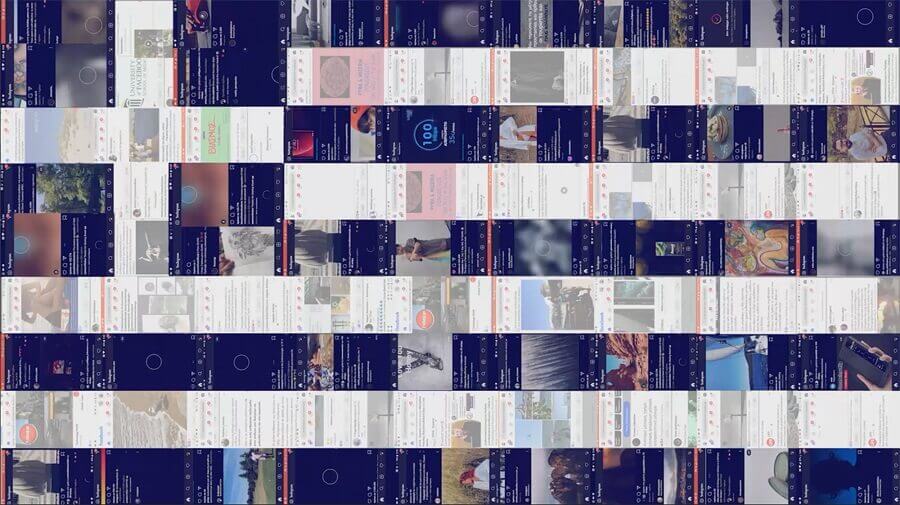
This artwork consists of multiple videos of scrolls down found in well-known social media, which were taken by smart phone and are displayed in a horizontal layout and continuous flow. On a second reading and as the viewer moves away from the individual information, he or she realizes that the Greek flag is formed in the video. The artwork seeks to ask questions about the ever-increasing use and abuse of social media in Greek everyday life. Being sometimes means of communication and information and sometimes tools of manipulation, social media make people concern and strongly influence society in its entirety, while the posts of their multiple users are now an integral part of our modern (digital) public space.
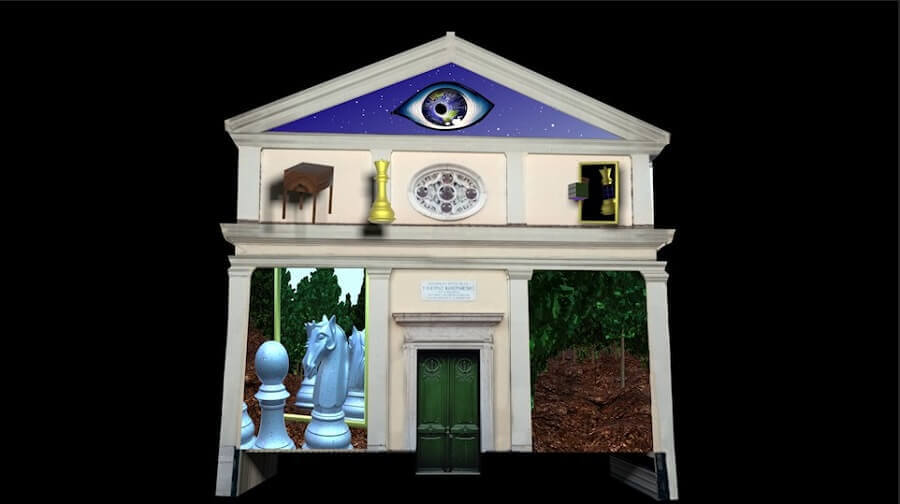
Presentation of 3d projection mapping, on Church of Panagia ton Xenon, Kyra - Faneromeni (Old Town, Corfu, Greece), October 2, 2020 at 10:00.
In the dissertation, following the strategy of deliberate ambiguity and crossing different eras, we go through a path of images and information, which express hope and fear in various fields and they characterize every culture and every society.
At the same time, moving from formalism to realism, it emerges that the Aristotelian definition of the representational unity of space-time-action is no longer valid in art. Undoubtedly, the formalist movement has shown that planes are understood not only as sequences of logical units, but also as theoretical or ideological conceptions, where their connection is not legitimized on the basis of the principle of space-time unit, but by some abstract theoretical model, such as is the model of metaphor, the path through contradictions, symbolism and anything else that enhances the removal of the theoretical model. But also internal realism, which is not a theory of truth, highlights the convergence of two seemingly incompatible ideas.
This is a Iove story between a female statue and a man. It is about the pious desires of people ας they apply them to the interpersonal relationships they develop.
This documentary is about my grandmother, Areti. I have her name. She is a very simple and sweet person. She always wants to take care of and feed us.

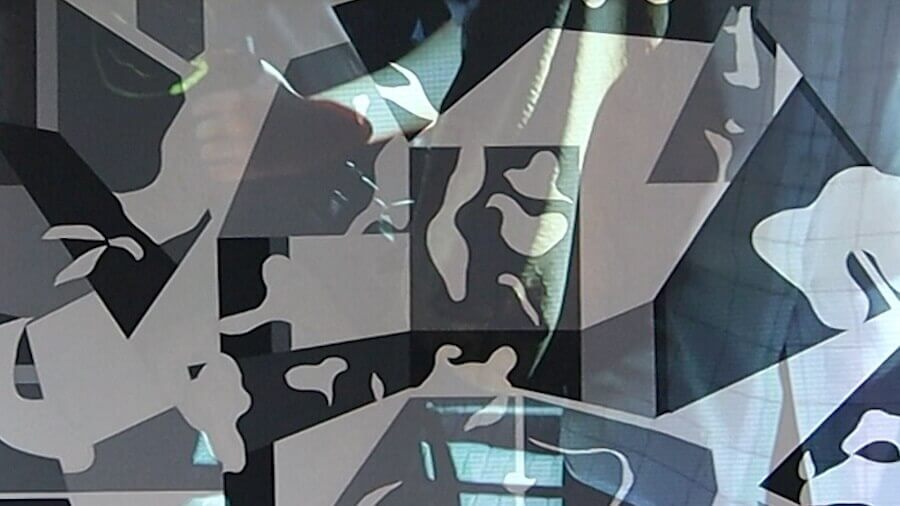
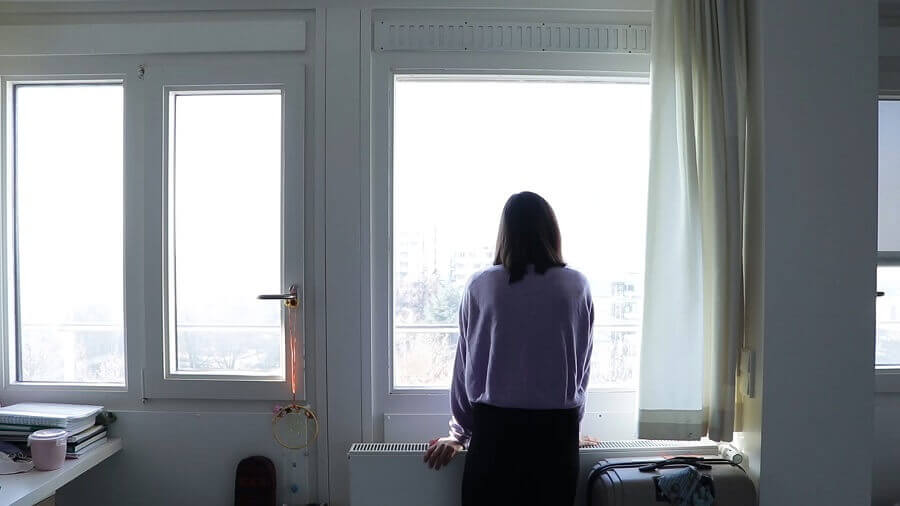
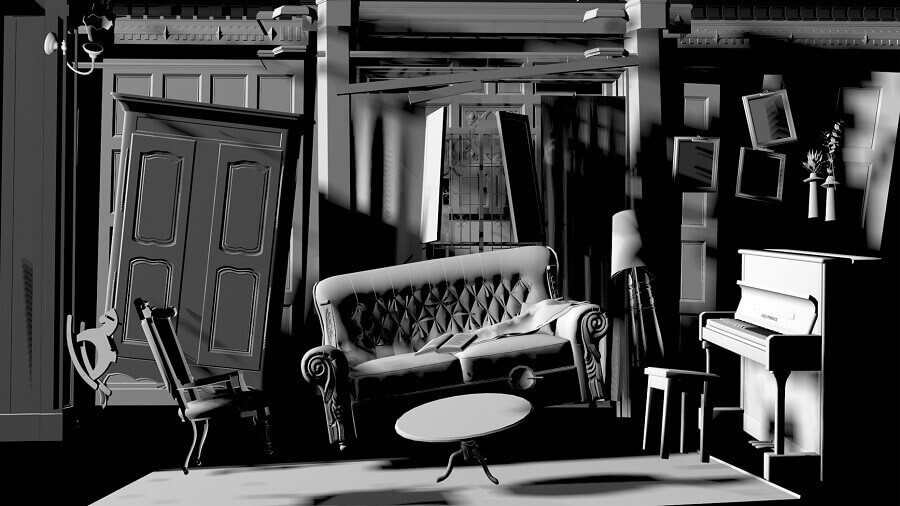
Where do memories go when they are lost? Are they still where we left them, if we don’t recall them? In this room, as private and irrevocable as our memory, objects animate a series of scenarios. A memory floods the room, another struggles to disclose itself, another one leaks back and forth in time. The idea of the ‘other’ hovers between what has already passed and what is reminisced every time. We never recollect events and spaces as such. We always enliven recollections in our own way. Through constant evocations that seek to perpetuate the existence of the ‘room’, memories converse with space and time, as well as with a part of ourselves. Either as past, forgetfulness or loss, they always contain something that is already gone.
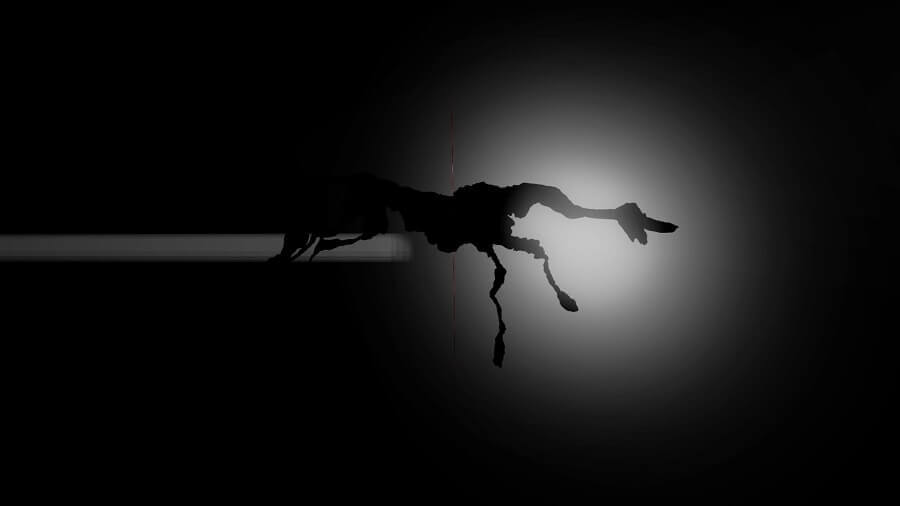
The video is a documentation of a spatial installation with a dual role, through viewing / observation and participation. The investigation of the relationship that develops between digital and real space, acting in it, as the main axis of the narrative, the human being is the framework of the research with object of study the concept of metaphor to the coexistence of experience as a narrative and of the experience of the present as a fact of performance. The real environment through recording projected into an analog painting and transferred to a digital environment (images-video- video projection) connecting the real, the digital and painting form. Respectively, the natural environment of the installation transferred to the projection surface, in a digital space, via the camera and projector.