
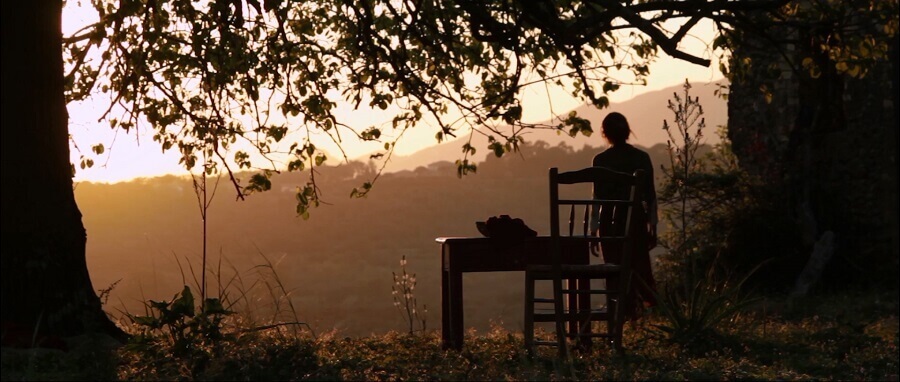
Aynadamar

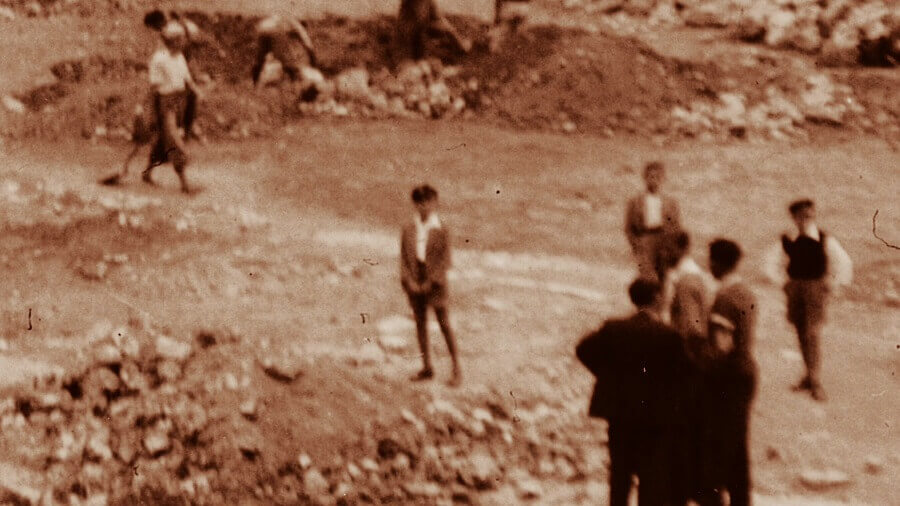
Aynadamar: An important place as far back as when the Arabs were in the area. The whole region of Andalusia was supplied with water through that spring, reaching as far as Madrid. Several years later, the poet and playwright Federico Garcia Lorca is taken there to be executed. His work in turn supplied the whole Spain and spread to the rest of the world. The documentary intertwines significant events of his life with dramatised excerpts from his work, aiming at achieving Duende (as Lorca used to say), the quintessence of all things.
Script,director: Margarita Chalakatevaki Assistant director: Dimitris Gkrintzos Spyros Kavvadias Editing: Margarita Chalakatevaki Music: Margarita Chalakatevaki Sound recording, mixing: Andreas Vouliakis Cinematography: Dimitris Gkrintzos Spyros Kavvadias Spyros Christoforatos Translation: Vasia Kordilla Cast Yerma Nafsika Nanou Juan Eftychios Selearis Little boy Ionas Singh Marianna Pineda Anita Liatsi Narration Sophia Ketentzian Recitation Margarita Chalakatevaki Singing voice Konstadina Koumouli
Related Works
The Wroom, is a movie that start with two red iron cars, a 1953 Chevrolet 1100 & a 1954 Magirus Deutz small fire engine, spilling out of a race of skills, flips and drifts at speed in the dining room of their home. In a brightly room, in a world where imagination knows no bounds.
A place of relative isolation and no influence from the outside environment. Black cloth with a small opening that the viewer enters wearing headphones and playing a soundscape I created on a magnifying glass.
The compositional method is based on the incorporation of sound material of cultural background into an electroacoustic piece. By drawing a linear narration, my aim was to demonstrate a unity, an imaginary community, which characterizes the Romani culture, despite the hybridic, complicated and diverse traditions deriving from the various European and Asian countries its people live in. A central question behind the making of this piece is what kind of role can a civilization have today, when the concept of space is eliminated by time- a key element in the dynamics of capitalism. What are the cultural consequences of the so-called annihilation of time and space, as materialized and tangible dimensions of social life? Are historical tradition and the search for roots promoted and reorganized as simulacra, imitations or/and museum culture, thourgh the demonstration of a partly deceptive past?
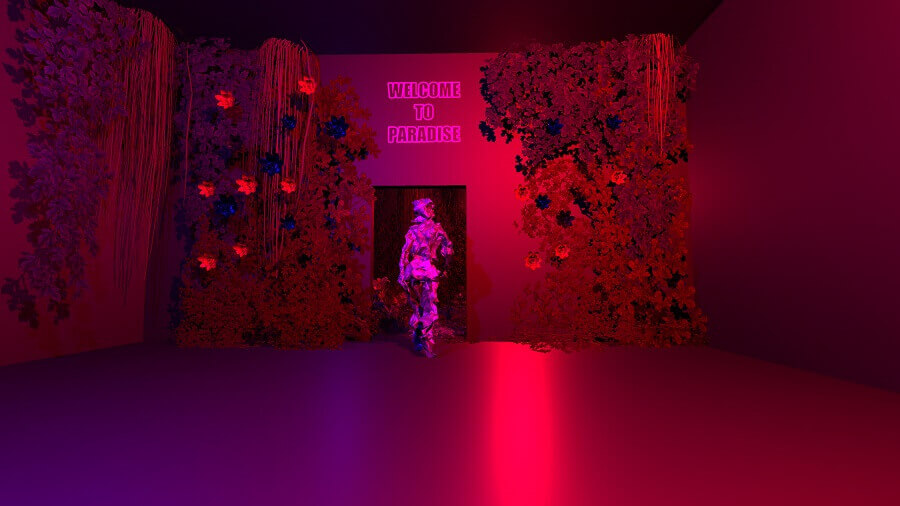
Presentation of 3d projection mapping, on Church of Panagia ton Xenon, Kyra - Faneromeni (Old Town, Corfu, Greece), October 2, 2020 at 10:00.
In the dissertation, following the strategy of deliberate ambiguity and crossing different eras, we go through a path of images and information, which express hope and fear in various fields and they characterize every culture and every society.
At the same time, moving from formalism to realism, it emerges that the Aristotelian definition of the representational unity of space-time-action is no longer valid in art. Undoubtedly, the formalist movement has shown that planes are understood not only as sequences of logical units, but also as theoretical or ideological conceptions, where their connection is not legitimized on the basis of the principle of space-time unit, but by some abstract theoretical model, such as is the model of metaphor, the path through contradictions, symbolism and anything else that enhances the removal of the theoretical model. But also internal realism, which is not a theory of truth, highlights the convergence of two seemingly incompatible ideas.
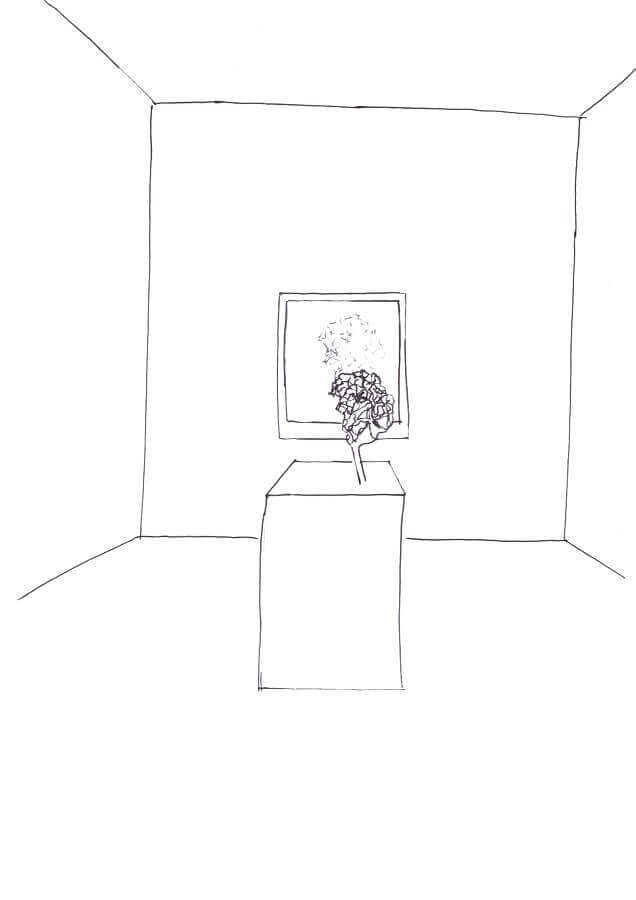
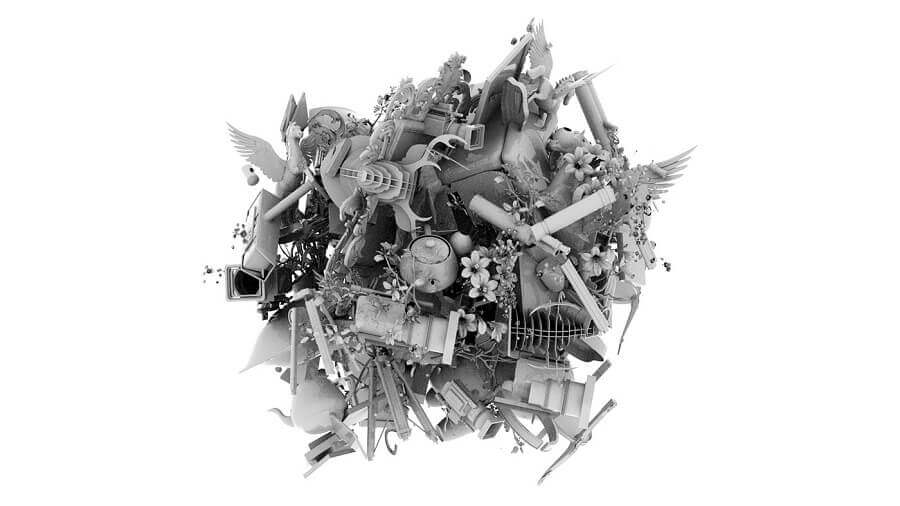
Where do memories go when they are lost? Are they still where we left them, if we don’t recall them? In this room, as private and irrevocable as our memory, objects animate a series of scenarios. A memory floods the room, another struggles to disclose itself, another one leaks back and forth in time. The idea of the ‘other’ hovers between what has already passed and what is reminisced every time. We never recollect events and spaces as such. We always enliven recollections in our own way. Through constant evocations that seek to perpetuate the existence of the ‘room’, memories converse with space and time, as well as with a part of ourselves. Either as past, forgetfulness or loss, they always contain something that is already gone.
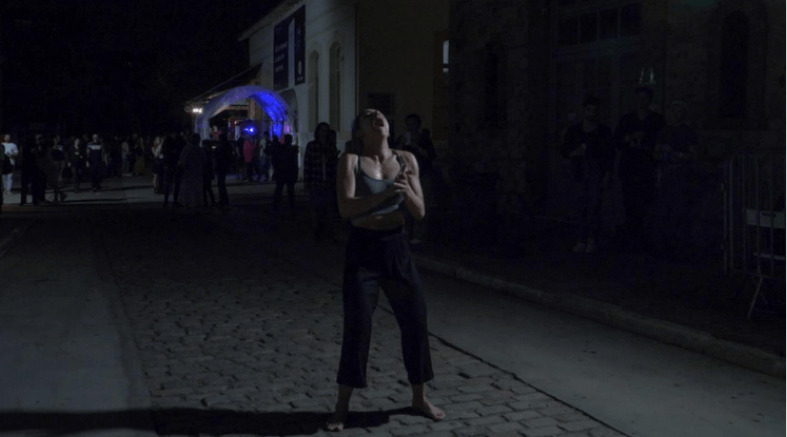
"Construction" is the documentation of the process of a rehearsal performed by contemporary dance and acrobatics company "Ki omWs kineitai" during the preparation of the group to participate in a theatrical play. It took place during the second lockdown in Athens in a climate of general uncertainty regarding the planning and performing of live performances. In "Construction" the return of the bodies to rehearsal conditions, the need for communication and reconnection and the memory of sharing with the spectators that still gives hope are recorded in a spontaneous and fragmentary way.
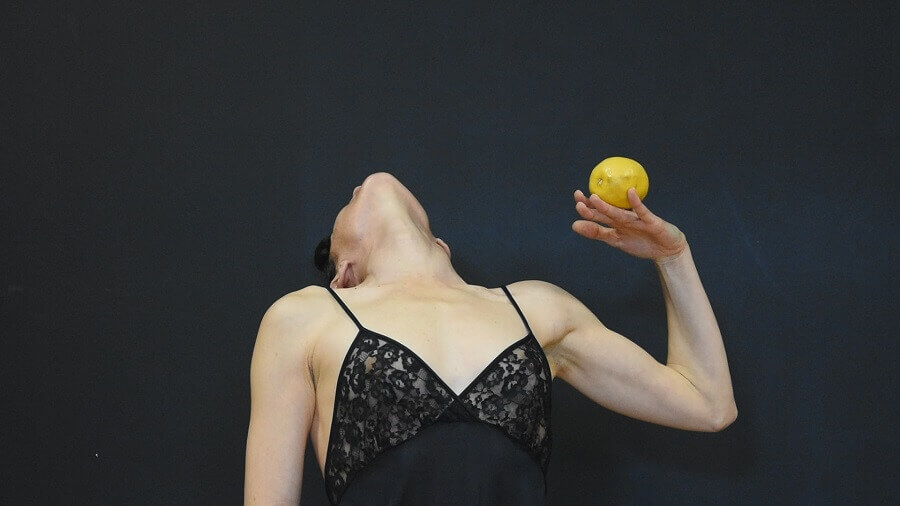
When the observer is standing in front of a work of art and is trying to comprehend it, they are consciously entering a recognition process. This is achieved because the brain recognizes the relationship between some shapes or colors in the piece of art and, automatically, recalls them from memory. This procedure creates the necessary conditions for the creation of new neural synapses. Using these facts?, the artist suggests an audiovisual performance that includes an interference of audio to the visual aspect? in real time.
Zoe is a 25 year-old student, living in Corfu island, Greece with her only friend and roommate Anne. Waking up late an afternoon Zoe realises that her friend is missing and she goes out at night alone in search of her. The strangely empty and quiet town, a series of bizzare events and the sense that she's been followed gives her the realization that something strange is going on and her eager to find her friend grows stronger.
At that time she comes across a dark human figure that wants to capture her. Trying to escape, Zoe ends up in a white room with nothing but a mirror inside.
As she walks closer to the mirror she sees that someone is trapped inside a room. Thinking that it's her friend Anne she reaches and goes through the mirror into that other room.
As she sits down next to the other person, thinking that she is Anne, she realizes it's her own self. In a desperate and decisive moment she tries to save her double, only to realize that her double can not cross to the other side of the mirror. Realizing that there's no way out the double lets go of Zoes hand.
Zoe wakes up in her room in the morning, gets dressed and goes for a walk by the sea in the now fully alive and noisy town. As she stands and stares at the waves she meets a girl named Anne sitting nearby. After the two girls meet they sit by the sea talking.