

Life as a Blooming Flower
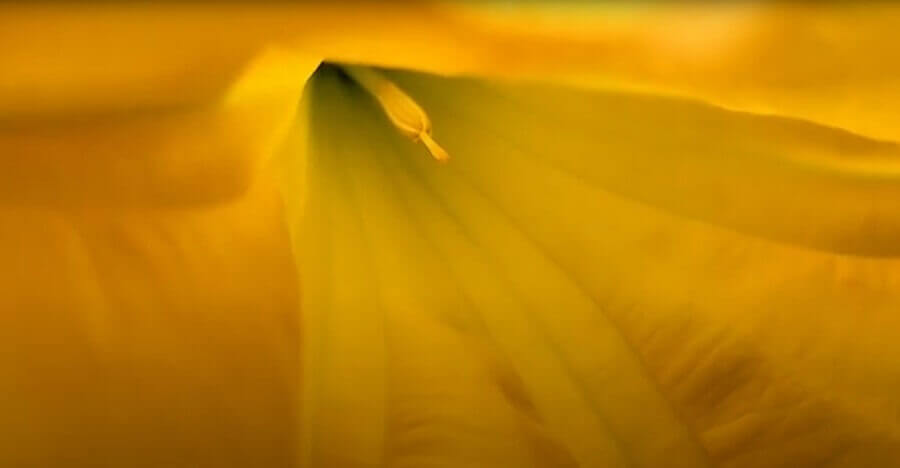
The project focuses on close-ups of flowers ας elements of the beauty of nature and the spiritual uplift created by the connection with it. The modern fast-paced lifestyle often does not allow people to stop and contemplate on the natural landscape. In this Video the digital capture of blooms constitutes an optimistic record of nature, while at the same time it raises questions about humankind's alienation from nature and its enjoyment through the use of digital media.
Related Works
The present postgraduate thesis was prepared in the context of the completion of the postgraduate program of the Department of Sound and Visual Arts of the Ionian University.
The study of the subject will be the facts and data on the occasion of the completion of 200 years since the Greek Revolution.
The present work aims to enrich the theoretical framework of study. Its structure is based on data that I have collected (rare photographic material, letters, etc.), from the Public Archives of the State, the Kapodistrias Museum and the Reading Company.
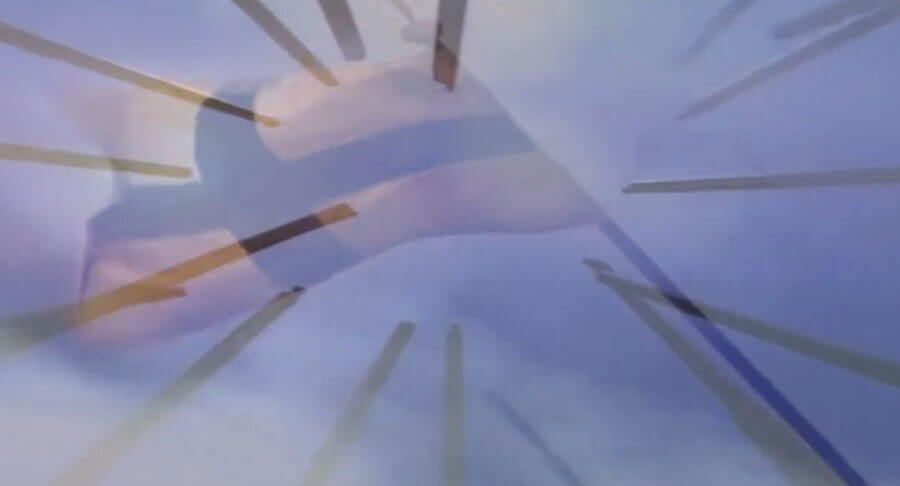
While we dream, much of the information that the brain involuntarily collects during the day, is intersected and integrated with previous experience and can be used in future behaviors.

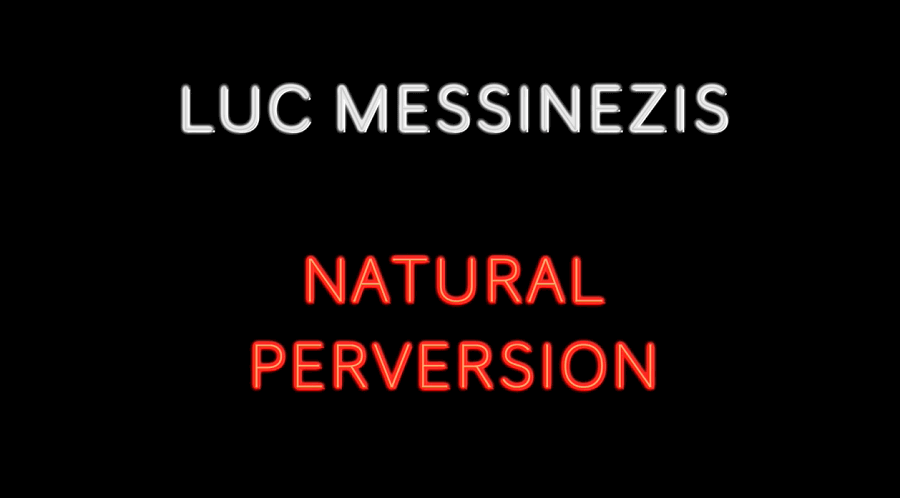
In the realm of acoustic hyper-reality we meet aural simulacra of the order of maleficence. These are signals that mask and denature a profound acoustic reality. They are referential and representational, but in a way that they dissimulate reality and become its twisted Doppelgängers. Simulacra of the order of maleficence are perversions of reality. With the sound artwork ‘Natural Perversion’ Through a set of sonic processes the artist delves into autogenerative, autopoietic, responsive and biomimetic modes of creation exploring how the original naturally produced audio signal can be transformed into a sonic caricature and depending on the way it balances between its signifier and its signified aspect, it may re-interpret naturally produced concrete audible events into a musical language which serves both the acousmatic and the non-cochlear approaches to contemporary sound art.
Every expression of the subject is inherent in the body image, indicating the lack of being, which desire tries to cover.
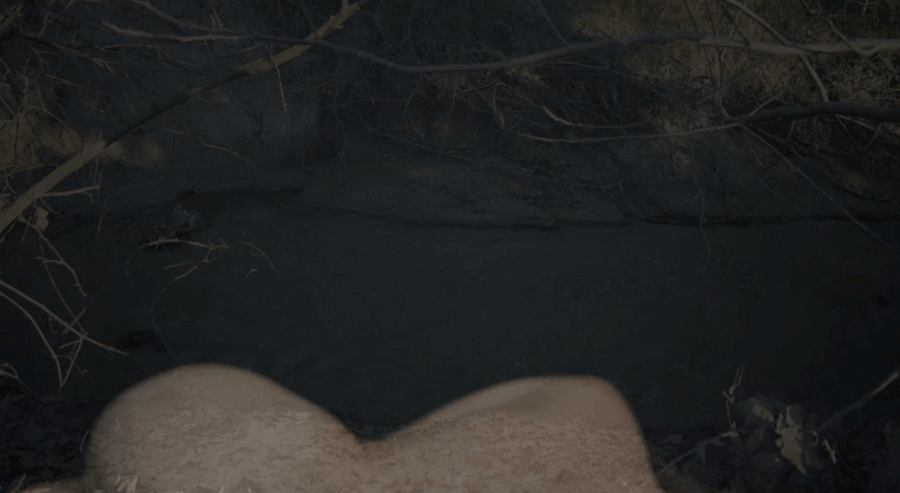
A short documentary, based on the theory of Observational Cinema. It is the portrait of the caretaker of the British Cemetery in the island of Corfu, Greece, Mr. Yorgos Psailas. The documentary deals with his daily life in the cemetery. Mr. Psailas also recounts the most important moments of his life as well as his thoughts about life and death.
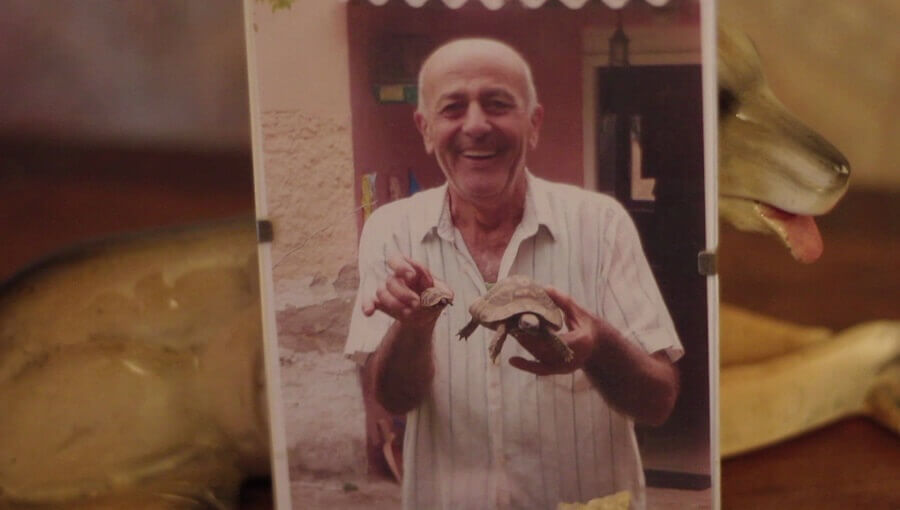
The quarantine's experience time has functioned as a humanized time. Its previous social barbarity was imprisoned in the familiar cage of my soul and became my creation time. Each day was my friend, an eternal circular and dynamic present, a consciousness without conflicts. It was like an eternity that is experienced differently every moment. An unprecedented form of stillness gripped me and perpetuated in many abstract fragments which finally formed the new texture of my existence, in this peculiar isolation. I became from the carcass of time I was before, its qualitative disintegration… Reality was distorted and experienced illusively. The time from the alienation that was before, was transformed and became the cover for the scratched truth of myself. This kind of time my conscience had dreamed to live.
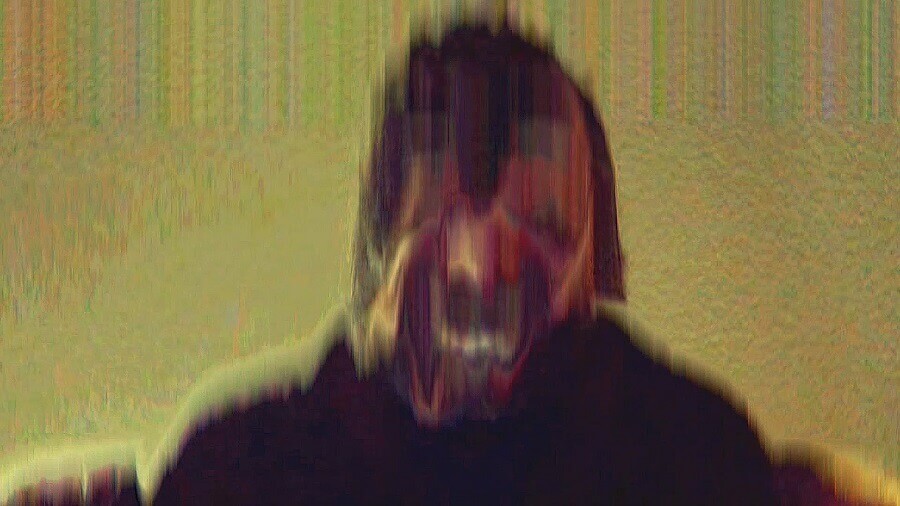
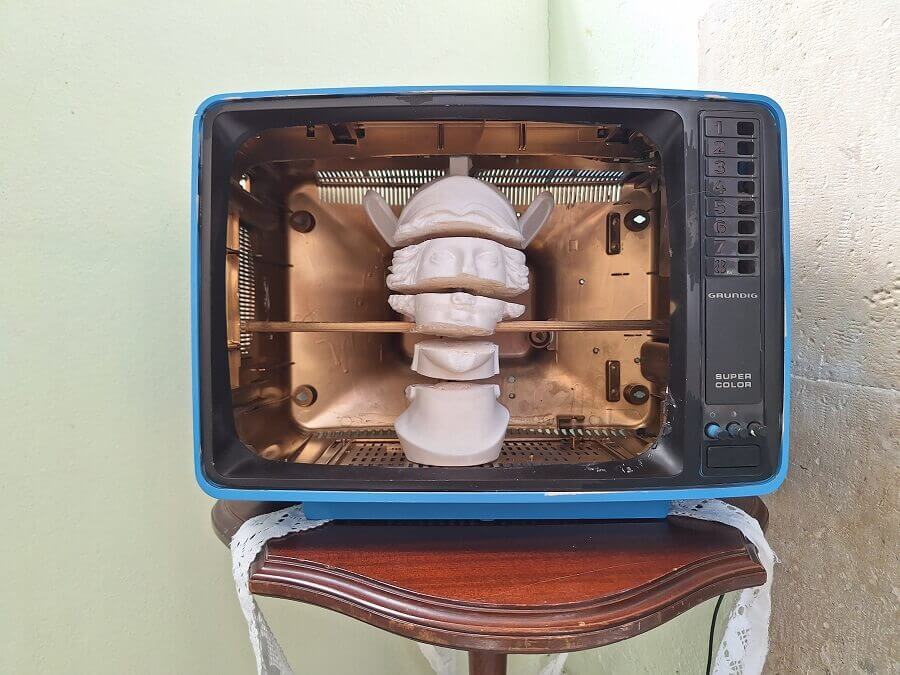
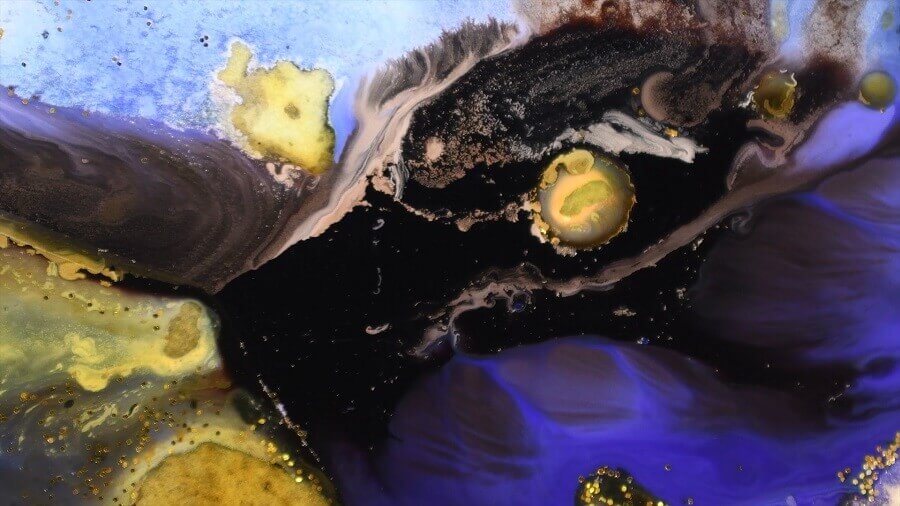
"Dharmadhatu" is an experimental audiovisual video with linear narrative. It has been created with an original experimental technique, where each frame results from a live recording of the behavior of flowing colors on a painted surface.
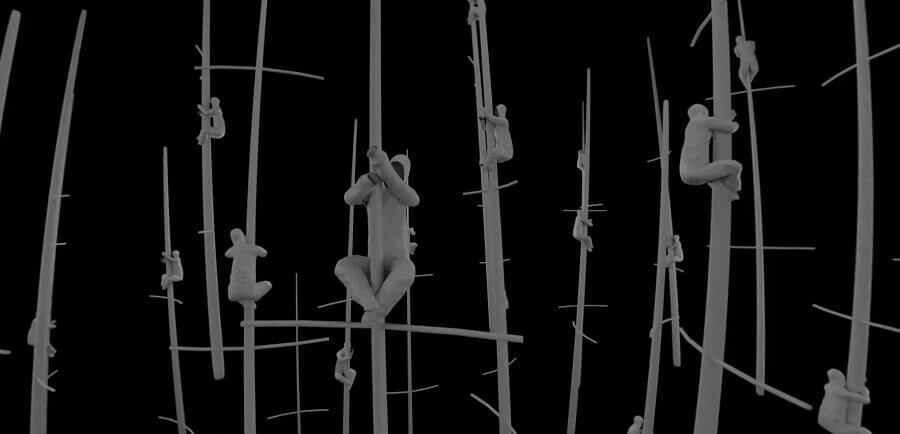
With the opportunity of the preparation of the trip, the productive process of maintenance, repair and work in the area of the shipyard, the project "Forest of Winds" is created. The project was named "Forest of Winds" because of the sound of the wind passing through the masts of the boats. The "Forest of Winds" is a 360 video animation evolving into a theatrical space and indefinite time. The video depicts the invisible side of a dream, the dream of a journey and its preparation with the forms of workers hovering impersonal in space as work uniforms, creating a choreographed kinesiological narrative process. The forms of workers rub, shine and accomplish all kinds of jobs with their repetitive motions, until they are left in space like objects in an endless free fall.
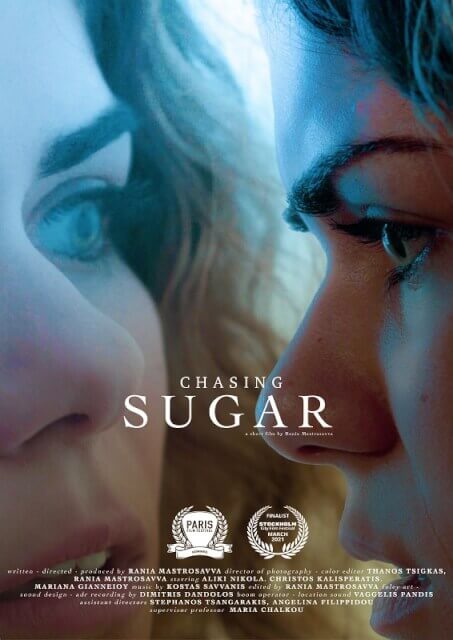
Zoe is a 25 year-old student, living in Corfu island, Greece with her only friend and roommate Anne. Waking up late an afternoon Zoe realises that her friend is missing and she goes out at night alone in search of her. The strangely empty and quiet town, a series of bizzare events and the sense that she's been followed gives her the realization that something strange is going on and her eager to find her friend grows stronger.
At that time she comes across a dark human figure that wants to capture her. Trying to escape, Zoe ends up in a white room with nothing but a mirror inside.
As she walks closer to the mirror she sees that someone is trapped inside a room. Thinking that it's her friend Anne she reaches and goes through the mirror into that other room.
As she sits down next to the other person, thinking that she is Anne, she realizes it's her own self. In a desperate and decisive moment she tries to save her double, only to realize that her double can not cross to the other side of the mirror. Realizing that there's no way out the double lets go of Zoes hand.
Zoe wakes up in her room in the morning, gets dressed and goes for a walk by the sea in the now fully alive and noisy town. As she stands and stares at the waves she meets a girl named Anne sitting nearby. After the two girls meet they sit by the sea talking.