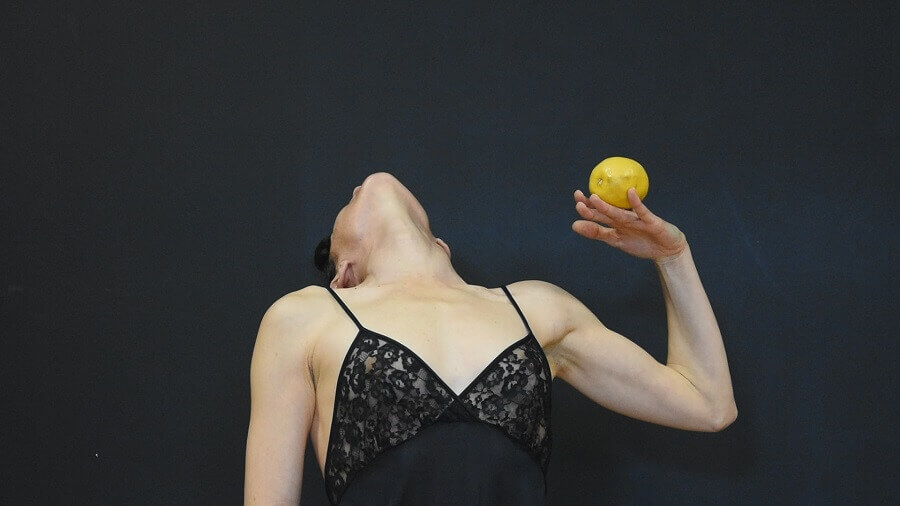


BLAH
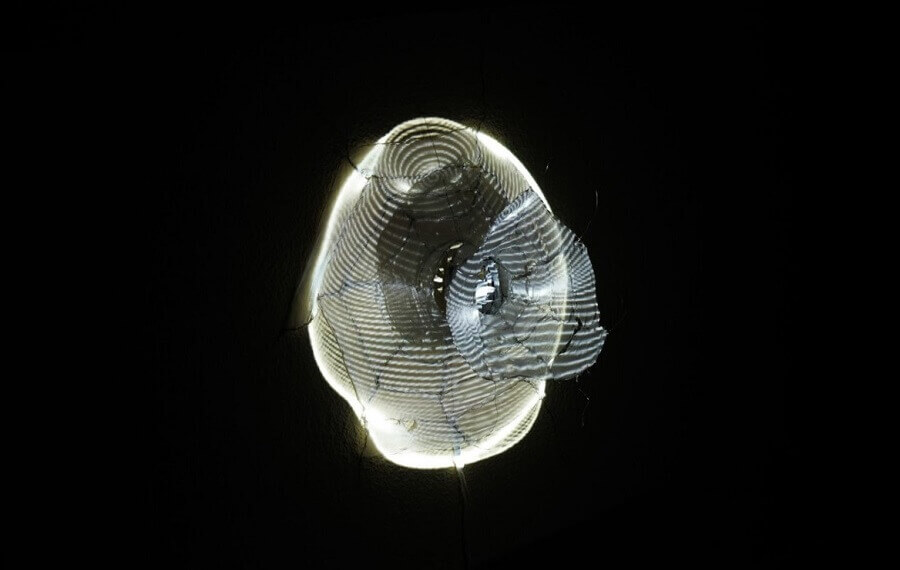
Blah as an artwork that interacts with the phenomenon of the speaking subject. The artwork responds to the human voice with air, and the intensity of the air is proportional to the volume of the voice.
Borrowing immersive practices from physical theater and the Black Box framework, the project seeks to create a liberating condition where visitors have the opportunity to experiment with their voice outside the system of organized language.
Blah is the artistic part of my master thesis on the problematic behind the three dimensions of organized language: communication-expression-meaning.
1x1x0.4
Related Works
When the observer is standing in front of a work of art and is trying to comprehend it, they are consciously entering a recognition process. This is achieved because the brain recognizes the relationship between some shapes or colors in the piece of art and, automatically, recalls them from memory. This procedure creates the necessary conditions for the creation of new neural synapses. Using these facts?, the artist suggests an audiovisual performance that includes an interference of audio to the visual aspect? in real time.
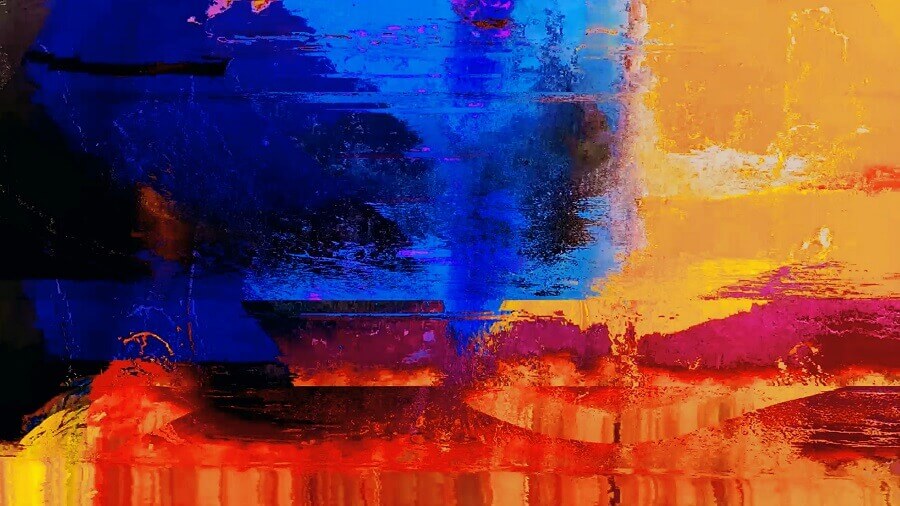
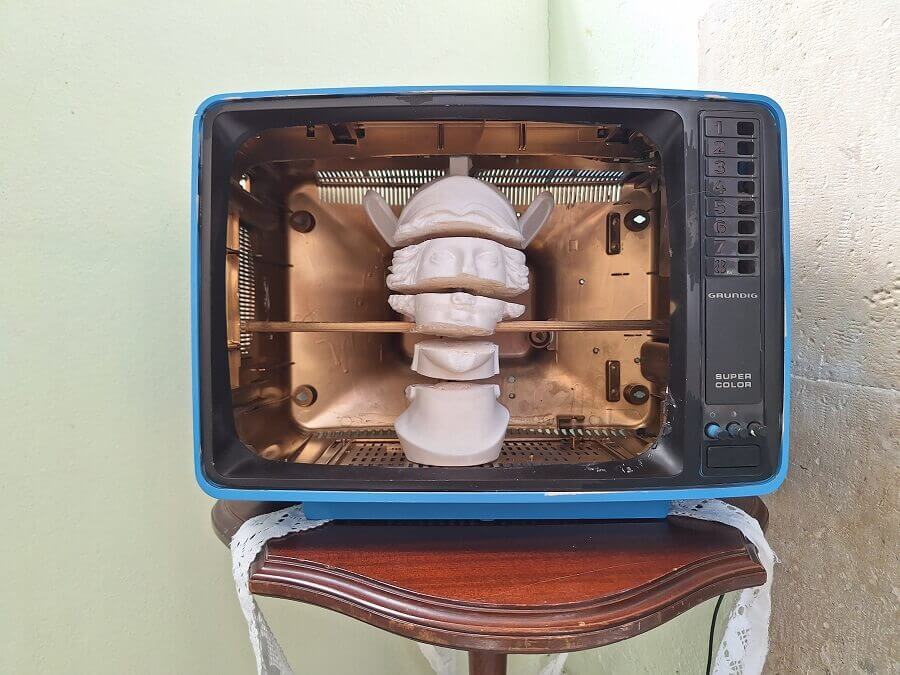
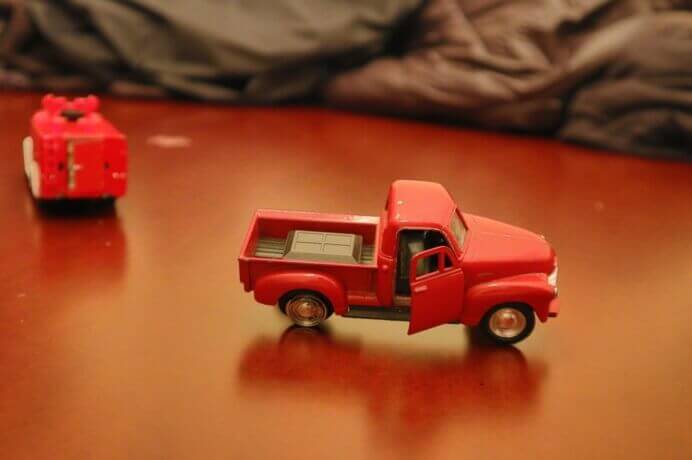
The Wroom, is a movie that start with two red iron cars, a 1953 Chevrolet 1100 & a 1954 Magirus Deutz small fire engine, spilling out of a race of skills, flips and drifts at speed in the dining room of their home. In a brightly room, in a world where imagination knows no bounds.
This thesis is about the production, direction and animation οf a contemporary dance music video lasting four (4) minutes. Its title is "OBLIVION: Music video using the Rotoscoping technique". Its subject is the loss of a great summer love and the pain that comes when this love is over. Its goal for all of its elements be to harmoniously joined together i. e. the dance, the surroundings, the colors, the music and the animation so as to make the viewer feel nostalgic and melancholic.
The AVARTS team's project "Filter Bubbles" aims to raise critical reflection on the extent of the responsibility attributed to algorithms and technology for the formation of these "isolation bubbles". Furthermore, through the artistic process, it aims to weaken the positive feedback loops that gigantize imperfect information, foster fear and undermine creativity.
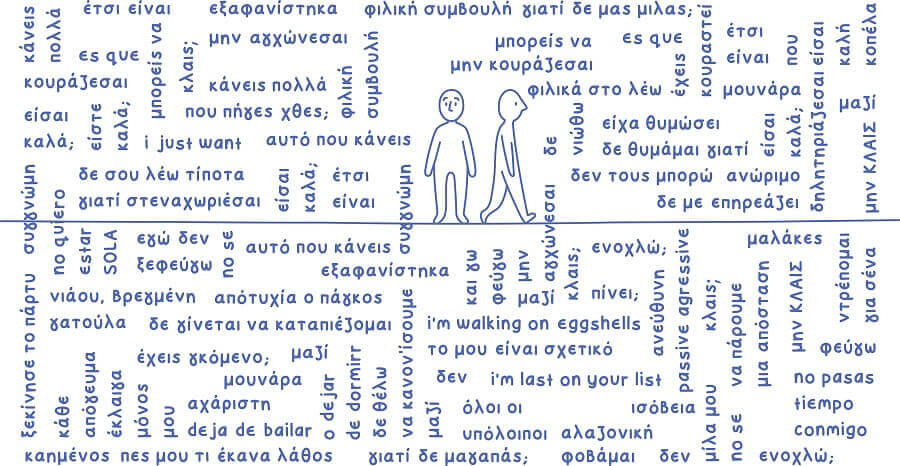
Α thought upon all the things we don't listen to, until we can't but listen. Αη animation featuring a creature balancing over the words that are haunting her.
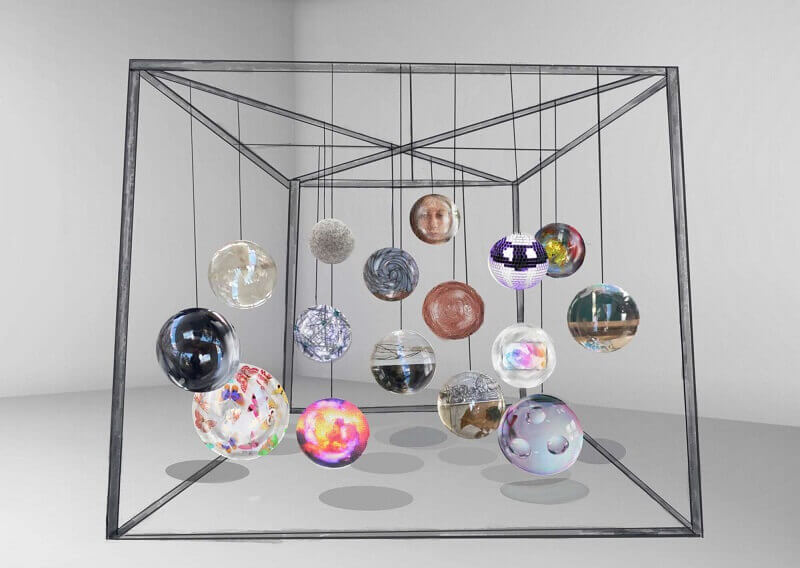
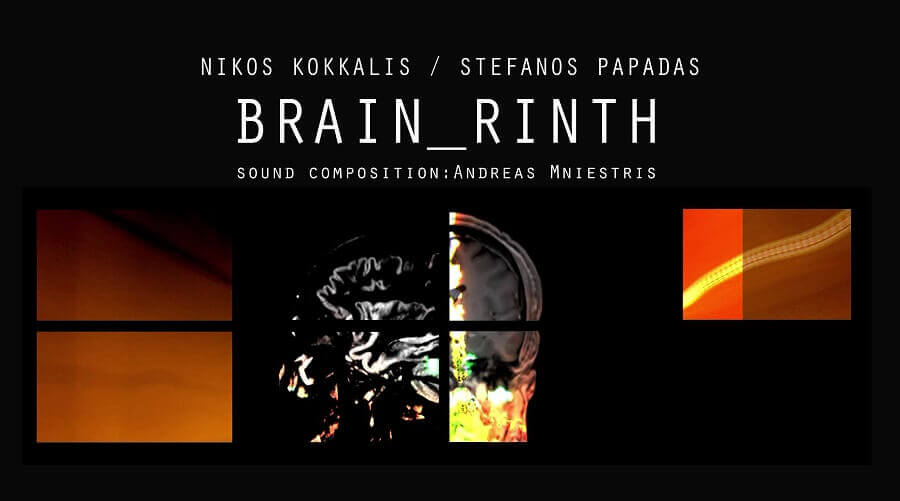
BRAINRINTH is a multi-channel video installation. The work attempts – through technology – to approach brain-related functions of memory, drawing on material from personal experience of the body in crisis. The title BRAINRINTH –from the words Brain and Labyrinth – is a play on the intractable riddle of an archetypal Greek structure (the labyrinth) and the labyrinthine processes of the human brain. The BRAINRINTH installation seeks a poetic mapping of the human brain.
Due to the shock of trauma, our understanding of the functioning of the body, and of nature itself –which we are trying to dominate – seems desperate and full of anxiety. Taking this into account, if we adopt a position in which we keep a distance of aesthetic neutrality, perhaps this reality begins to look less frightening.
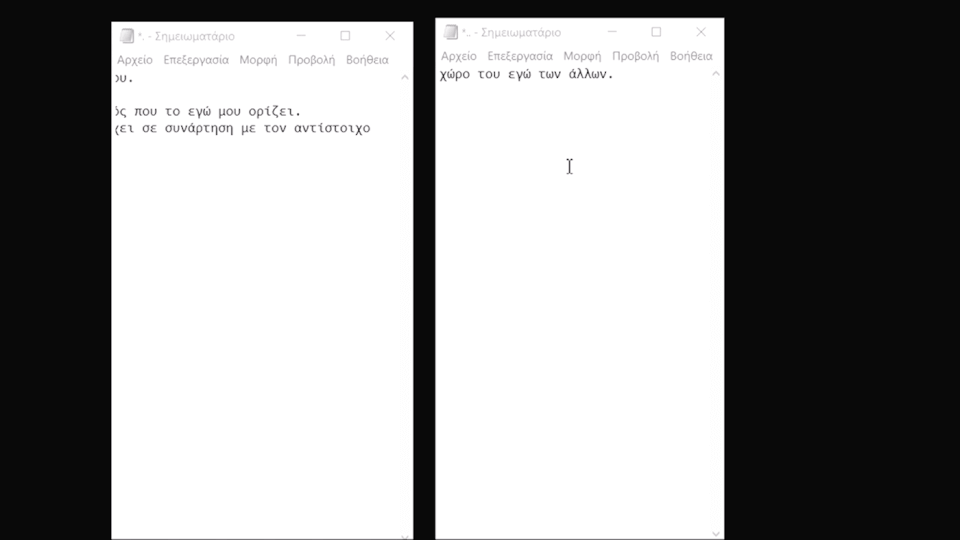
Α work based on the rules of kinetic poetry and explores the relationship between Space and Self. The Space defined by our Self [Ego] is malleable, it changes and interacts with the Space of Others. Physical and non-physical, the Space covered by the Ego is hetero-determined and constantly changing in eternity.
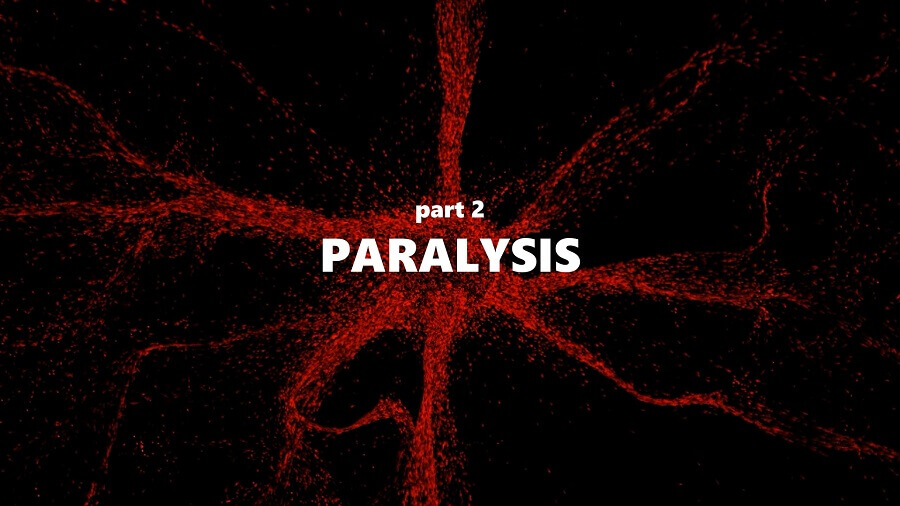
The audiovisual work "Paralysis by Analysis" presents a combined experience that unfolds in two chapters of two and three dimensions respectively.
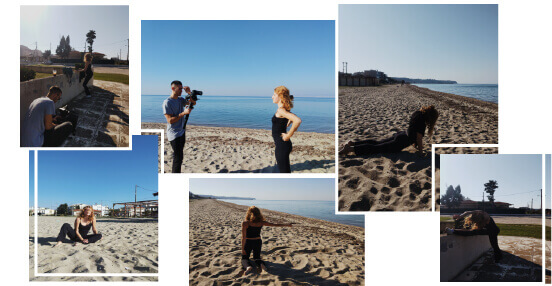
The short documentary focuses on the preparation of the solo performance "EVA", performed by the dancer and performer Evangelia Randou. The project is based on her personal experiences and has been created and staged by her. The film reveals the moments when the dancer works with her body, experiments, creates and improvises. The documentary is a portrait of the dancer herself, but also of the work she creates.