


7500+1 sculptures
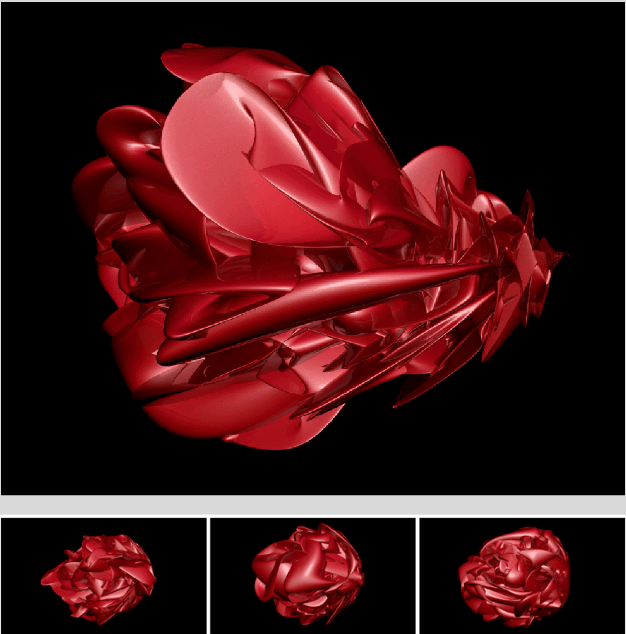
The Video installation in the exhibition emphasizes and at the same time negates the temporality of a medium whose dominant form of expression is space. The endless flow of different aspects and versions of the sculpture's form transports the sculpture from space to time, removing the limitations... In addition, the use of a projection screen adds to the space of sculpture a ”living” object -the moving image- that formally and technically does not belong to it. The Video is shown with the courtesy of Batagianni Gallery.
Related Works
The current project is a digital, interactive, audiovisual application that can be used either as a virtual installation accompanied by a simultaneous projection of its content in the physical space or be distributed as an executable digital medium on any computer, compatible with its technical specifications. It examines the flow of information, its creation, collection, storage, interpretation and utilization through perceptual mechanisms that mutate -enhance or degrade- with the available tools of digital reality and its transformation from a sequence of serial, adjacent and referential values to one unified context, what is usually interpreted as meaning or significance. The participants of this reality are called upon to engage at the degree of signification that expresses them better, ranging from a purely perceptual and empirical viewing to a frantic clarification of everything included.
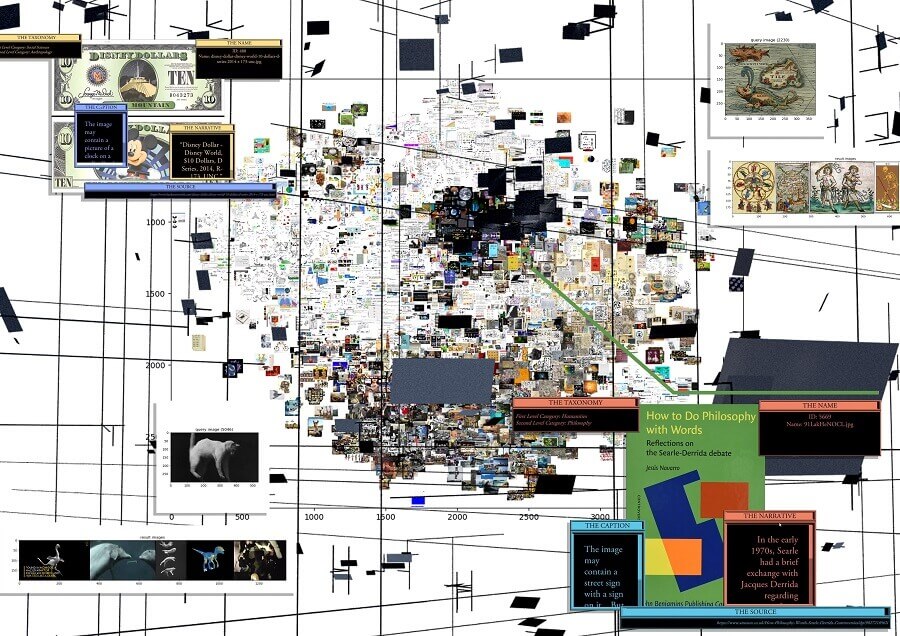
While we dream, much of the information that the brain involuntarily collects during the day, is intersected and integrated with previous experience and can be used in future behaviors.

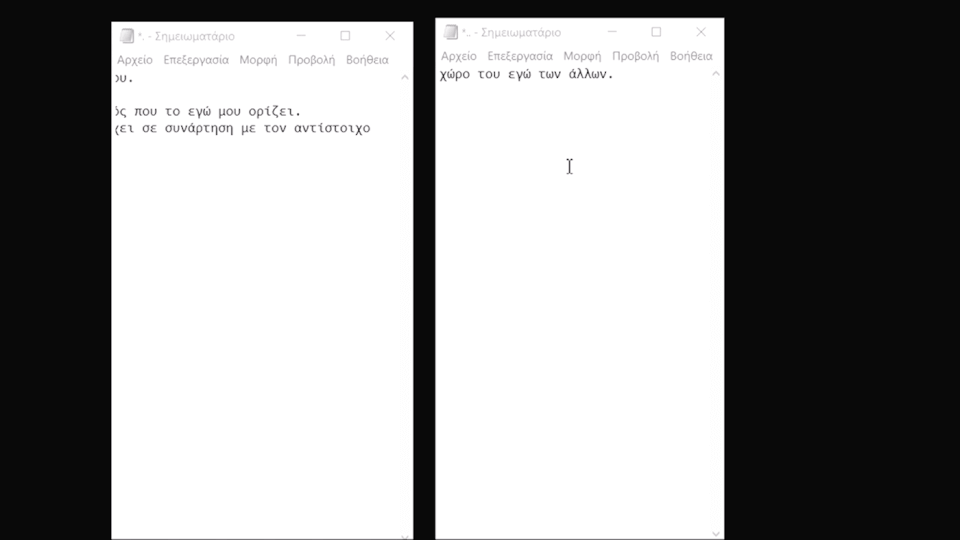
Α work based on the rules of kinetic poetry and explores the relationship between Space and Self. The Space defined by our Self [Ego] is malleable, it changes and interacts with the Space of Others. Physical and non-physical, the Space covered by the Ego is hetero-determined and constantly changing in eternity.
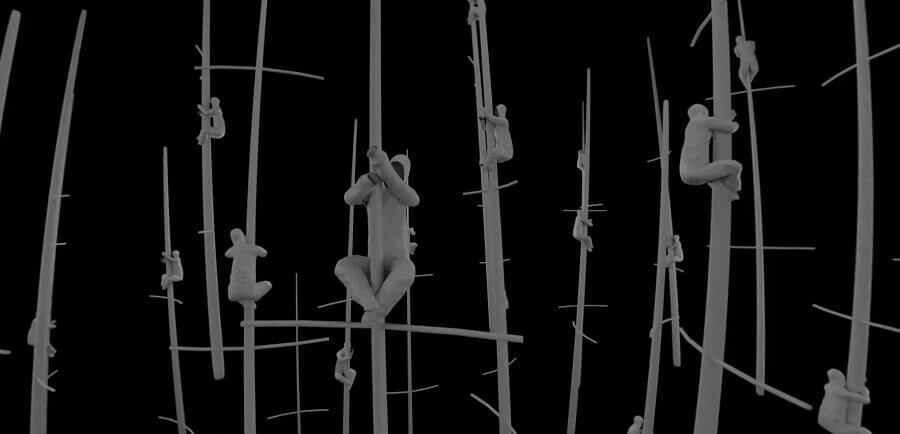
With the opportunity of the preparation of the trip, the productive process of maintenance, repair and work in the area of the shipyard, the project "Forest of Winds" is created. The project was named "Forest of Winds" because of the sound of the wind passing through the masts of the boats. The "Forest of Winds" is a 360 video animation evolving into a theatrical space and indefinite time. The video depicts the invisible side of a dream, the dream of a journey and its preparation with the forms of workers hovering impersonal in space as work uniforms, creating a choreographed kinesiological narrative process. The forms of workers rub, shine and accomplish all kinds of jobs with their repetitive motions, until they are left in space like objects in an endless free fall.
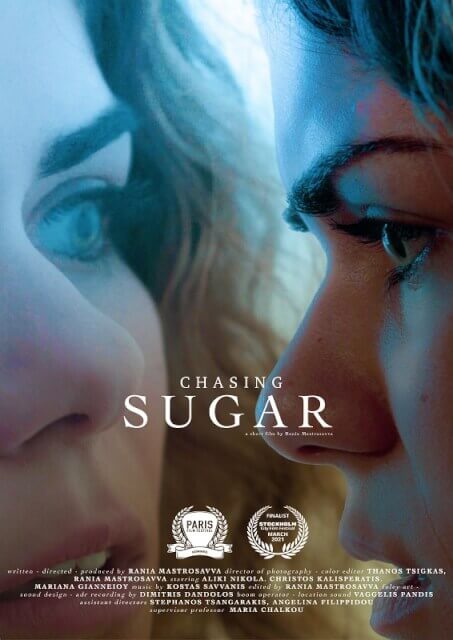
Zoe is a 25 year-old student, living in Corfu island, Greece with her only friend and roommate Anne. Waking up late an afternoon Zoe realises that her friend is missing and she goes out at night alone in search of her. The strangely empty and quiet town, a series of bizzare events and the sense that she's been followed gives her the realization that something strange is going on and her eager to find her friend grows stronger.
At that time she comes across a dark human figure that wants to capture her. Trying to escape, Zoe ends up in a white room with nothing but a mirror inside.
As she walks closer to the mirror she sees that someone is trapped inside a room. Thinking that it's her friend Anne she reaches and goes through the mirror into that other room.
As she sits down next to the other person, thinking that she is Anne, she realizes it's her own self. In a desperate and decisive moment she tries to save her double, only to realize that her double can not cross to the other side of the mirror. Realizing that there's no way out the double lets go of Zoes hand.
Zoe wakes up in her room in the morning, gets dressed and goes for a walk by the sea in the now fully alive and noisy town. As she stands and stares at the waves she meets a girl named Anne sitting nearby. After the two girls meet they sit by the sea talking.
The fulfillment of a last wish leads Filippo to a retrospection from the mountains of Epirus to the recent past of the year 1945. His meeting with his history revives the memory of a whole village, unfolding the relations and the bonding of two peoples against the commands of an era, which is not as far as we think.