

One week in ten minutes
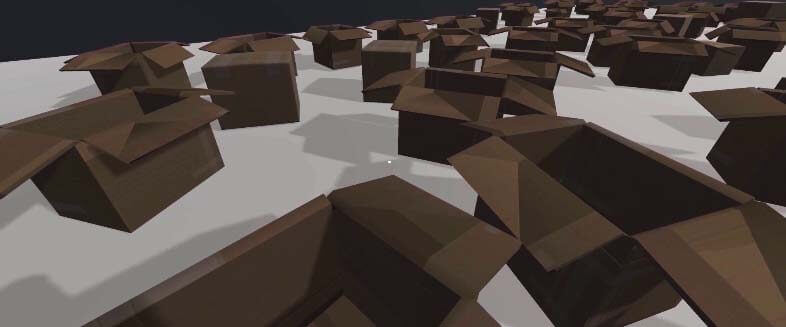
One week in ten minutes is a video in which the recording of unboxing, the act of opening the boxes, confronts the viewer with the repeated search in empty boxes that contain absolutely nothing. Each box is the promise of a gift which is to come, promising a gift whose dispatchment is always deferred.
Related Works
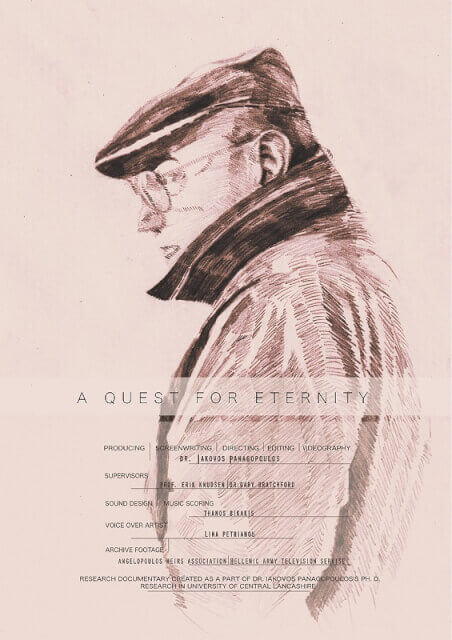
The research documentary A Quest for Eternity (2020) focuses in four different elements of Angelopoulos’s style and provides new information using and analysing the data from semi-structured interviews. This research documentary is part of Dr. Iakovos Panagopoulos practice based Phd research in the University of Central Lancashire with the title: “Reshaping Contemporary Greek Cinema Through a Re-evaluation of the Historical and Political Perspective of Theo Angelopoulos's Work”(Panagopoulos, 2019).
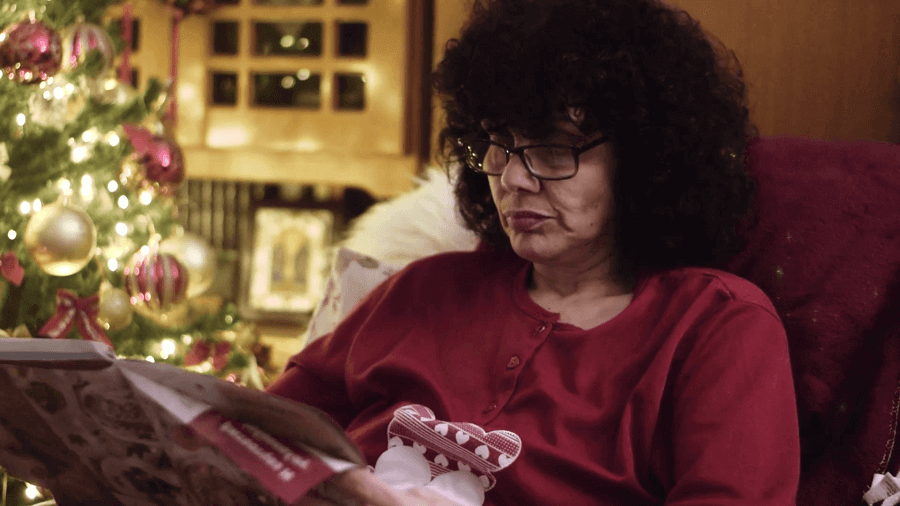
A day in my mother's life. The documentary shows her daily routine, something that I personally find very interesting as I believe that the true self of a person lies in the "insignificant".
Paraphrase, reference of the title to the depression caused by the shocking images of drowned children in the Mediterranean, the watery grave of persecuted refuges.

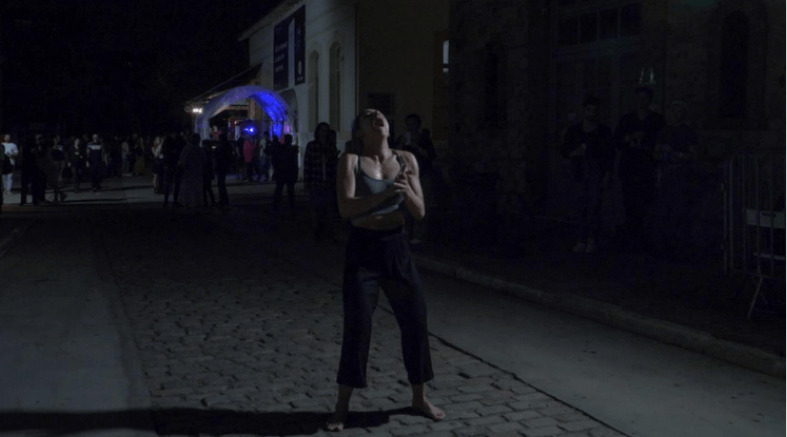
An essay-film which looks for mnemic traces of major political events inscribed in the body of the metropolitan entity of Athens.
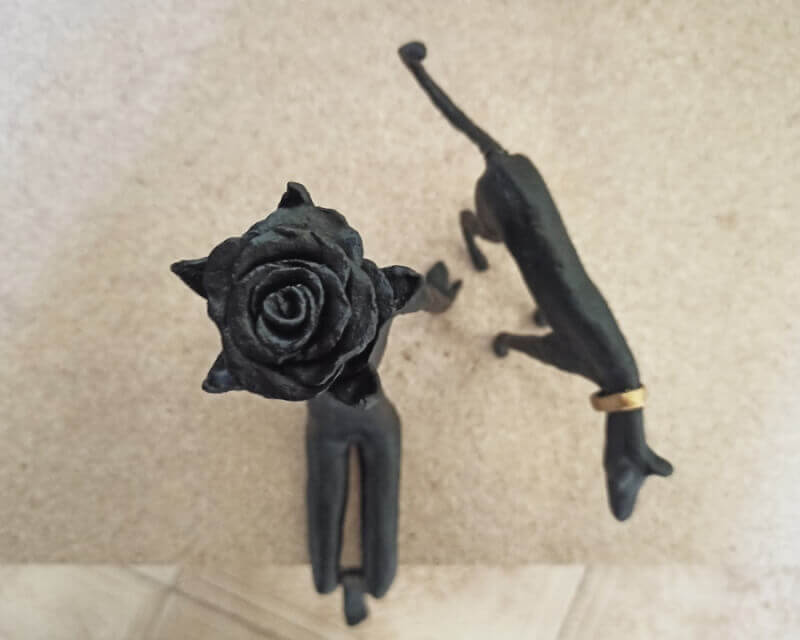
The subject of Charis Myrsilidi’s thesis concerns the transfer of literary text to image. The excerpts of the selected texts are stories from the Grimm brothers' fairy tales and the connecting link is the pattern of transformation (metamorphosis). The presentation of the practical part of the thesis concerns an installation with clay sculptures, sound track and lighting. The sculptural space is formed by Charis Myrsilidi, a student of the Department of Audio Visual Arts and the sound by the composer Ioannis Konsolakis.
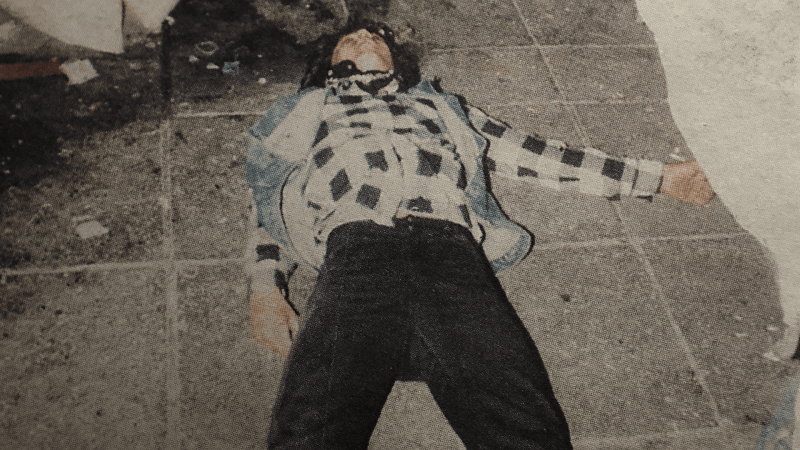
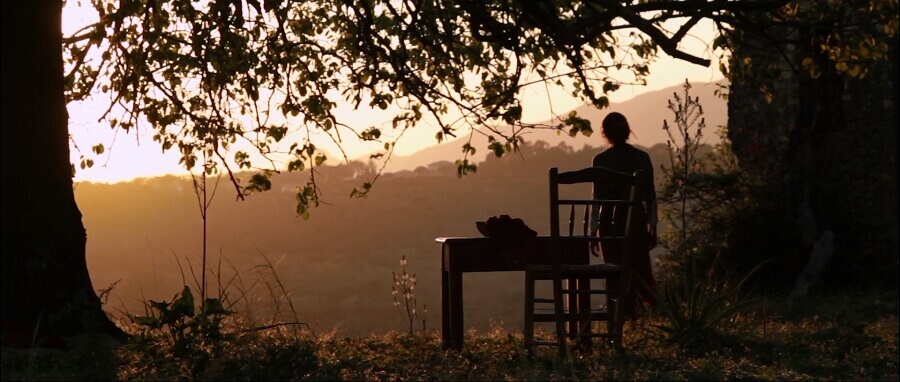
Aynadamar: An important place as far back as when the Arabs were in the area. The whole region of Andalusia was supplied with water through that spring, reaching as far as Madrid. Several years later, the poet and playwright Federico Garcia Lorca is taken there to be executed. His work in turn supplied the whole Spain and spread to the rest of the world. The documentary intertwines significant events of his life with dramatised excerpts from his work, aiming at achieving Duende (as Lorca used to say), the quintessence of all things.
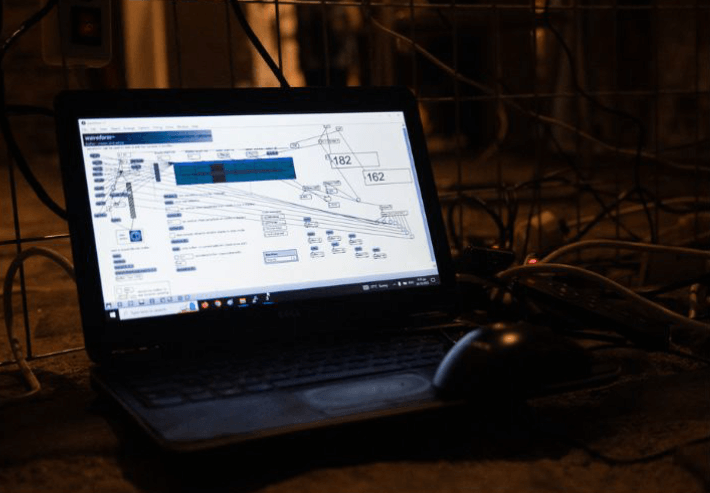
Multiple distance sensors trigger sound events ας people move around and get close to the grid with the srceens.
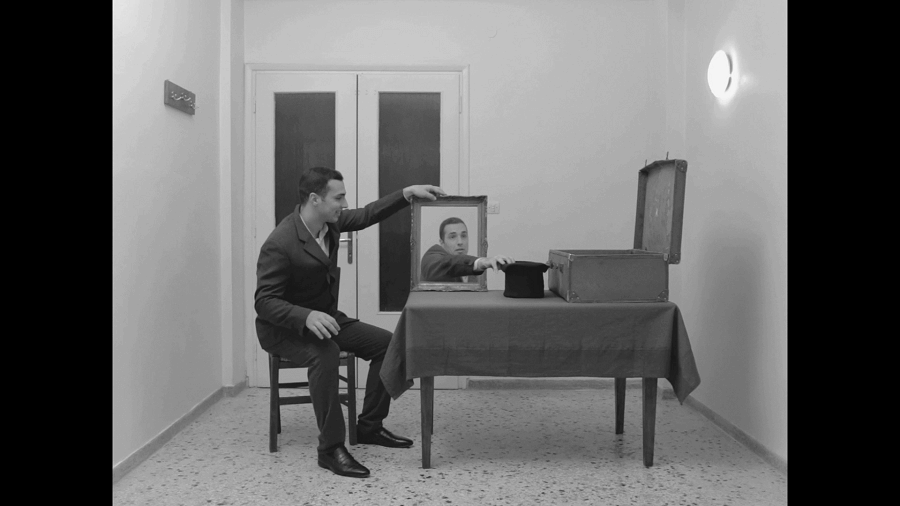
The main subject of this thesis is to analyze the special effects that George Melies used and invented, as well as the creation of a short film with special and visual effects, inspired by Melies’ work. This film has been implemented using modern techniques, aiming for an outcome that seems realistic but cannot actually happen in real life. All the techniques that have been used to create the film will be analyzed in depth.
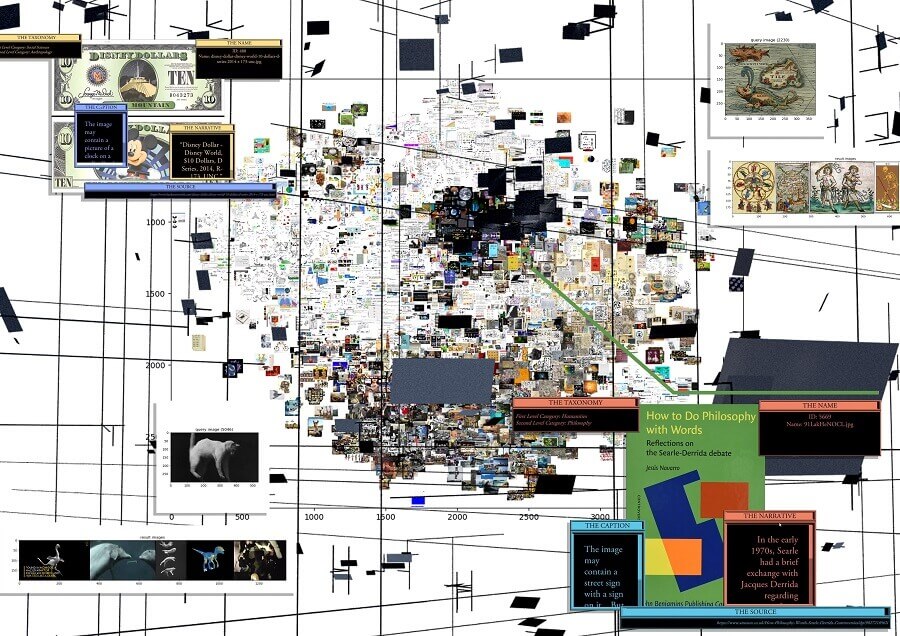
The current project is a digital, interactive, audiovisual application that can be used either as a virtual installation accompanied by a simultaneous projection of its content in the physical space or be distributed as an executable digital medium on any computer, compatible with its technical specifications. It examines the flow of information, its creation, collection, storage, interpretation and utilization through perceptual mechanisms that mutate -enhance or degrade- with the available tools of digital reality and its transformation from a sequence of serial, adjacent and referential values to one unified context, what is usually interpreted as meaning or significance. The participants of this reality are called upon to engage at the degree of signification that expresses them better, ranging from a purely perceptual and empirical viewing to a frantic clarification of everything included.