

Audio Crossings
Interactive Audio Installation
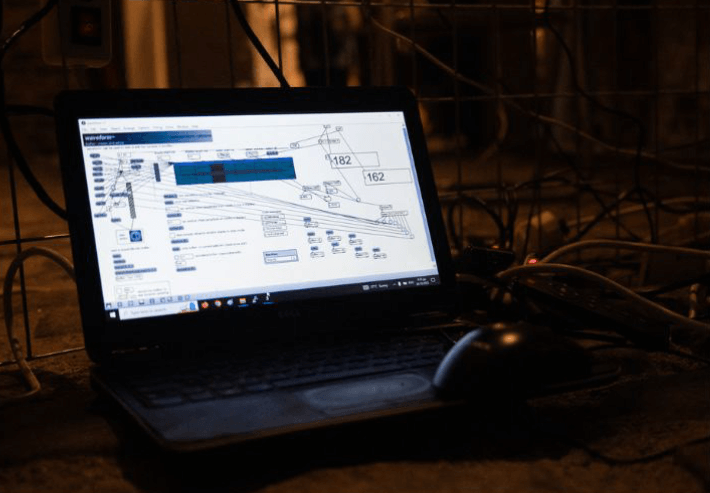
Multiple distance sensors trigger sound events ας people move around and get close to the grid with the srceens. Specific spots in the surrounding space can cause crossings of the audio sources, either additive or subtractive, resulting in an either silent, noisy, subsonic or granular synthesis. People interact with the sonic environment by moving around causing random crossings and changing the audio behaviour of the space.
Related Works
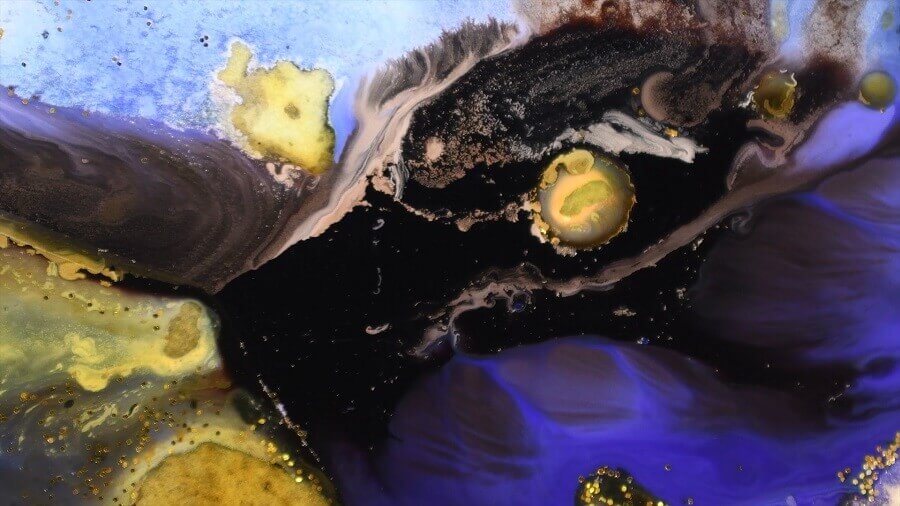
"Dharmadhatu" is an experimental audiovisual video with linear narrative. It has been created with an original experimental technique, where each frame results from a live recording of the behavior of flowing colors on a painted surface.
A day in my mother's life. The documentary shows her daily routine, something that I personally find very interesting as I believe that the true self of a person lies in the "insignificant".

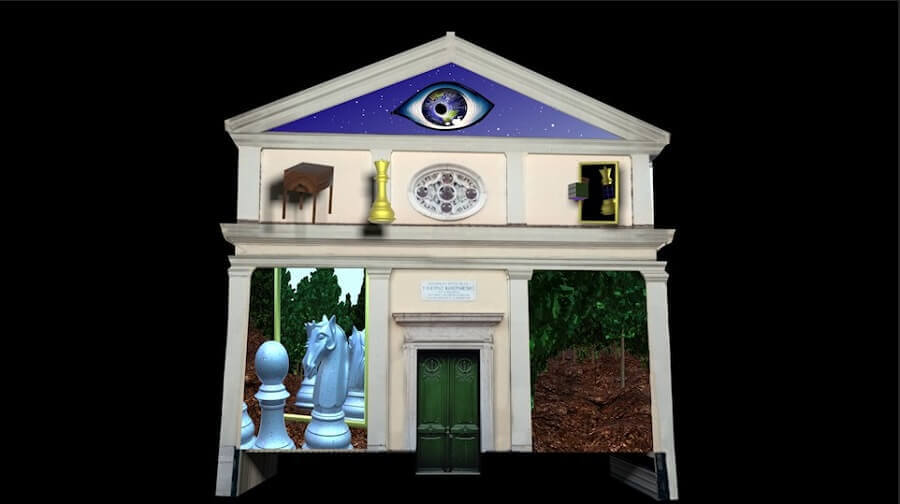
Presentation of 3d projection mapping, on Church of Panagia ton Xenon, Kyra - Faneromeni (Old Town, Corfu, Greece), October 2, 2020 at 10:00.
In the dissertation, following the strategy of deliberate ambiguity and crossing different eras, we go through a path of images and information, which express hope and fear in various fields and they characterize every culture and every society.
At the same time, moving from formalism to realism, it emerges that the Aristotelian definition of the representational unity of space-time-action is no longer valid in art. Undoubtedly, the formalist movement has shown that planes are understood not only as sequences of logical units, but also as theoretical or ideological conceptions, where their connection is not legitimized on the basis of the principle of space-time unit, but by some abstract theoretical model, such as is the model of metaphor, the path through contradictions, symbolism and anything else that enhances the removal of the theoretical model. But also internal realism, which is not a theory of truth, highlights the convergence of two seemingly incompatible ideas.
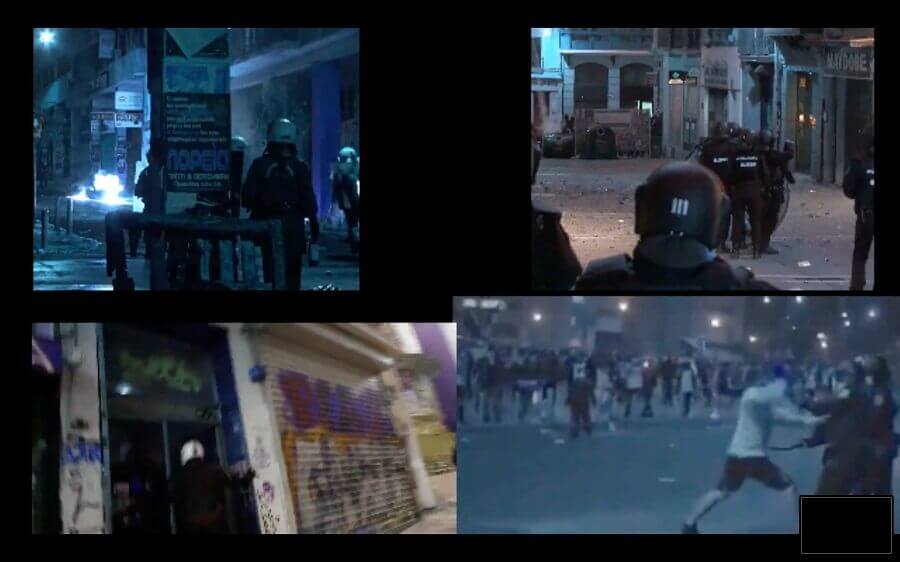
This is the first video of my audiovisual installation entitled "Riot Strike Riot". The audiovisual installation entitled "Riot Strike Riot" is based on the political repression and social disorders of recent years with a focus on Greece, but also with influences from abroad. The installation has presented from a subjective point of view, the socio-political image of today through audiovisual digital media, interactive systems, and objects.
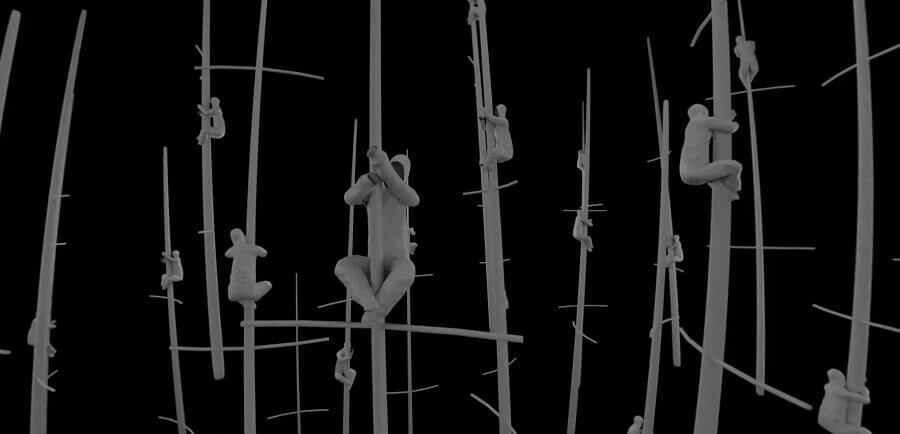
With the opportunity of the preparation of the trip, the productive process of maintenance, repair and work in the area of the shipyard, the project "Forest of Winds" is created. The project was named "Forest of Winds" because of the sound of the wind passing through the masts of the boats. The "Forest of Winds" is a 360 video animation evolving into a theatrical space and indefinite time. The video depicts the invisible side of a dream, the dream of a journey and its preparation with the forms of workers hovering impersonal in space as work uniforms, creating a choreographed kinesiological narrative process. The forms of workers rub, shine and accomplish all kinds of jobs with their repetitive motions, until they are left in space like objects in an endless free fall.
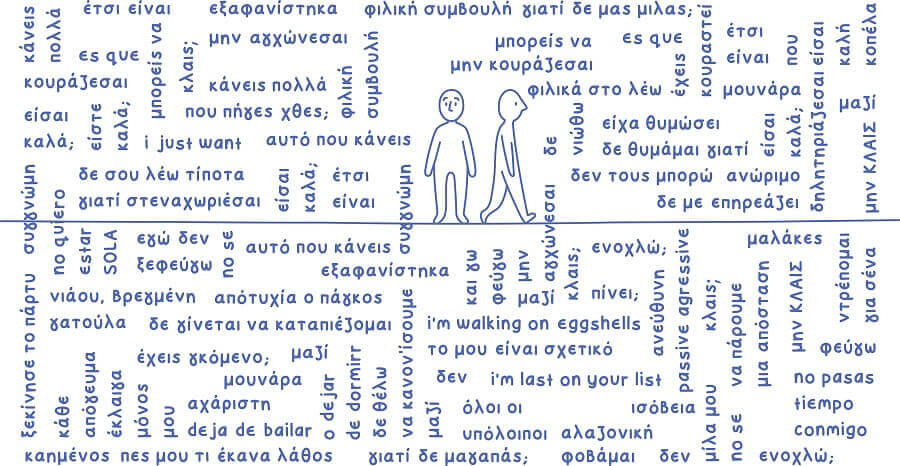
Α thought upon all the things we don't listen to, until we can't but listen. Αη animation featuring a creature balancing over the words that are haunting her.
The audiovisual work "Paralysis by Analysis" presents a combined experience that unfolds in two chapters of two and three dimensions respectively.