

Inside the body
Every expression of the subject is inherent in the body image, indicating the lack of being, which desire tries to cover. The body image is an in the context of an already existing relation, contained in a body placed in space. The bodily form is the Place, source of the impulses, the body image is the Place of their representation in the absence of being.
Related Works
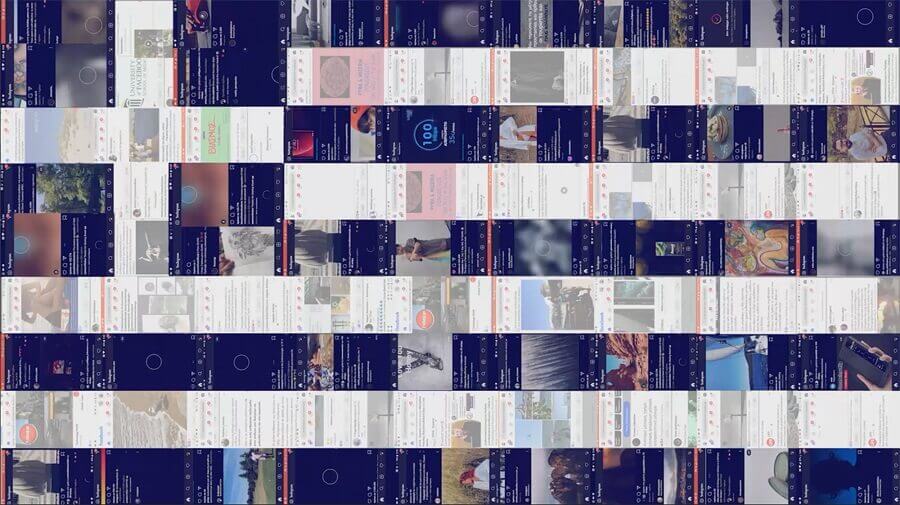
This artwork consists of multiple videos of scrolls down found in well-known social media, which were taken by smart phone and are displayed in a horizontal layout and continuous flow. On a second reading and as the viewer moves away from the individual information, he or she realizes that the Greek flag is formed in the video. The artwork seeks to ask questions about the ever-increasing use and abuse of social media in Greek everyday life. Being sometimes means of communication and information and sometimes tools of manipulation, social media make people concern and strongly influence society in its entirety, while the posts of their multiple users are now an integral part of our modern (digital) public space.
The audiovisual work "Paralysis by Analysis" presents a combined experience that unfolds in two chapters of two and three dimensions respectively.
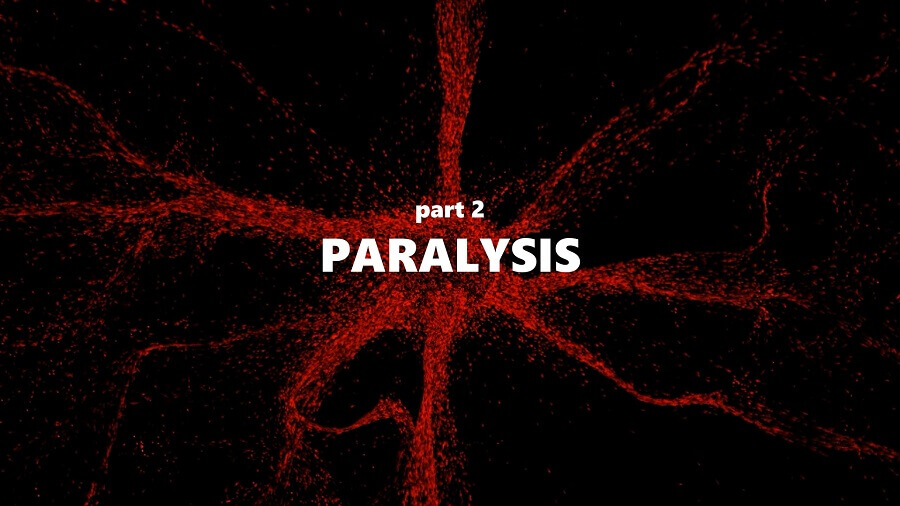
When the observer is standing in front of a work of art and is trying to comprehend it, they are consciously entering a recognition process. This is achieved because the brain recognizes the relationship between some shapes or colors in the piece of art and, automatically, recalls them from memory. This procedure creates the necessary conditions for the creation of new neural synapses. Using these facts?, the artist suggests an audiovisual performance that includes an interference of audio to the visual aspect? in real time.
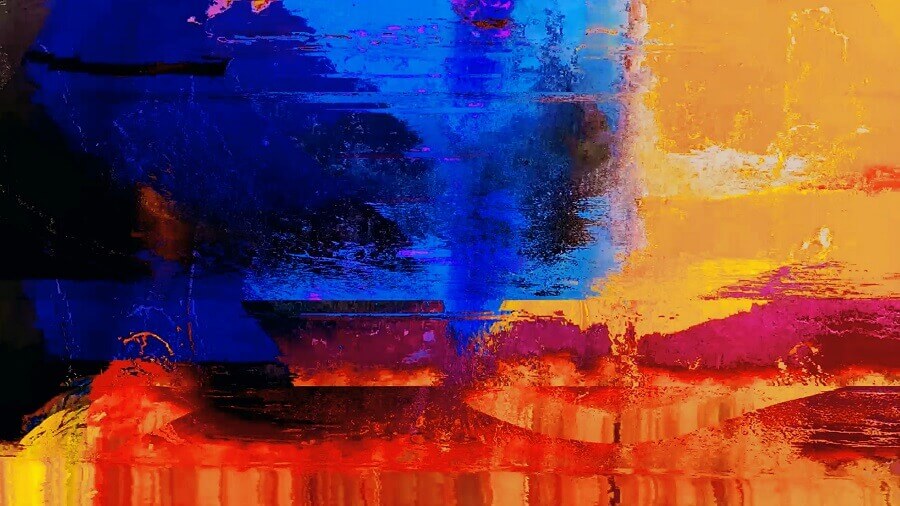
Τhis piece refers to a suffocating relationship between a father and a son. This oppressive relationship is expressed by the father’s obsessive calls to the son to come and eat his food warm. The son lives in an imperative rhythm of breakfast/lunch/dinner with few getaways because his father never stops calling him, while having a piercing voice. The father lives in a rhythm of constant orthostatic food production. A very elastic son, a very rigid father. A piece of wood, also rigid, who attracts the son. She had been washed by the sea. The highest boiling temperature is at sea-level. Splashing and seething became one. Apnea and immersion in his father’s pot, which is the symbol of his influence, eventually are leading to his release. He tightened so tight on her that for the first time he was stabilised. They were swept away from the waves and while floating they turned into furniture.
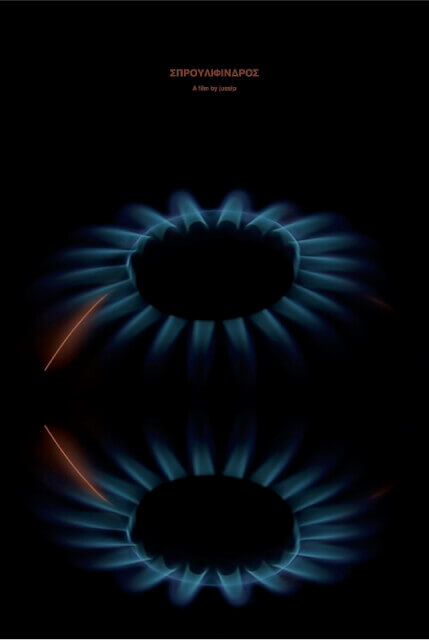
It is a work of digital design in real time that in its evolution displays the Word human, relationship coupling, thoughts and feelings..
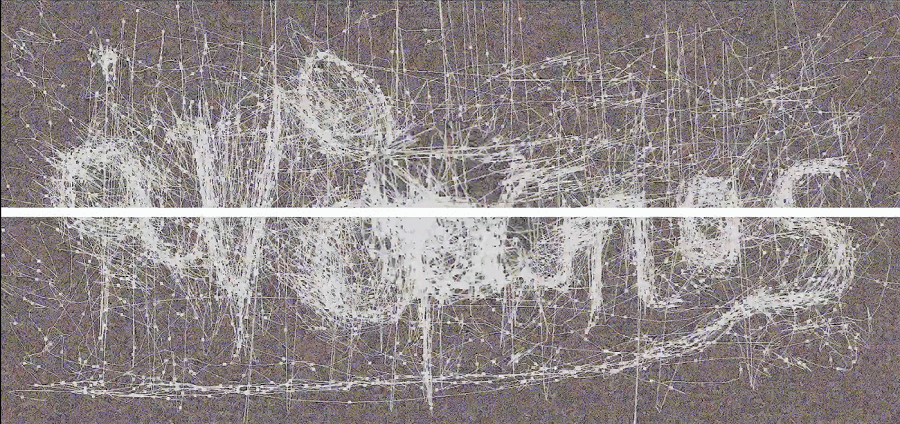
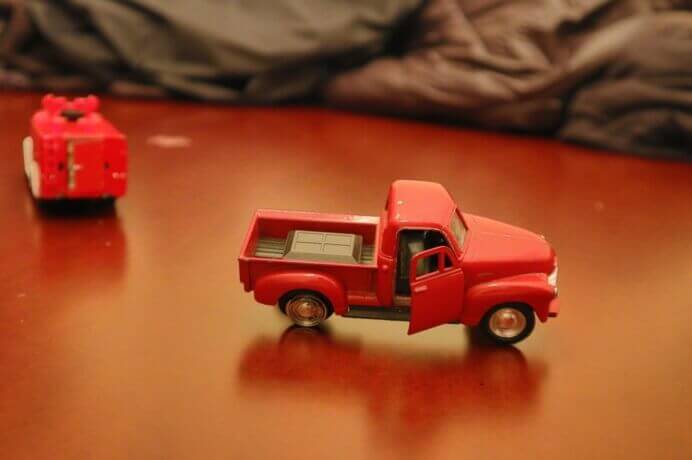
The Wroom, is a movie that start with two red iron cars, a 1953 Chevrolet 1100 & a 1954 Magirus Deutz small fire engine, spilling out of a race of skills, flips and drifts at speed in the dining room of their home. In a brightly room, in a world where imagination knows no bounds.