

Related Works
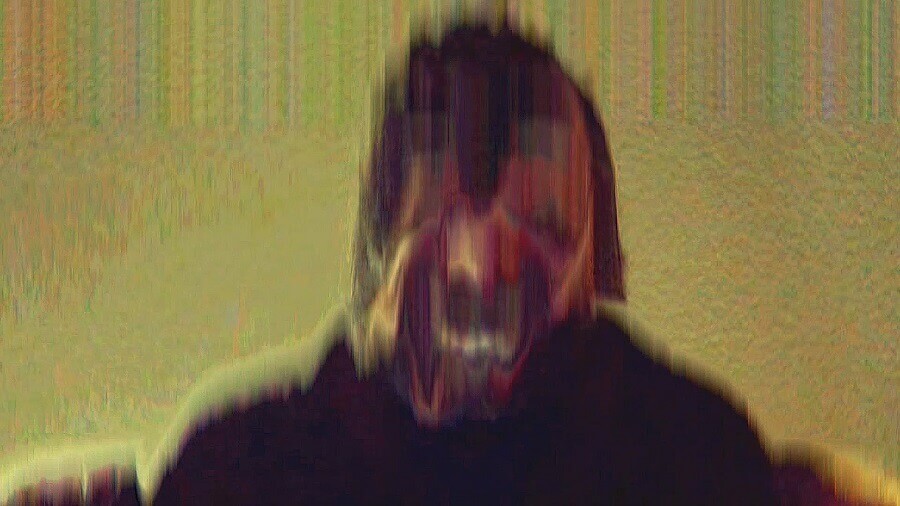
The quarantine's experience time has functioned as a humanized time. Its previous social barbarity was imprisoned in the familiar cage of my soul and became my creation time. Each day was my friend, an eternal circular and dynamic present, a consciousness without conflicts. It was like an eternity that is experienced differently every moment. An unprecedented form of stillness gripped me and perpetuated in many abstract fragments which finally formed the new texture of my existence, in this peculiar isolation. I became from the carcass of time I was before, its qualitative disintegration… Reality was distorted and experienced illusively. The time from the alienation that was before, was transformed and became the cover for the scratched truth of myself. This kind of time my conscience had dreamed to live.
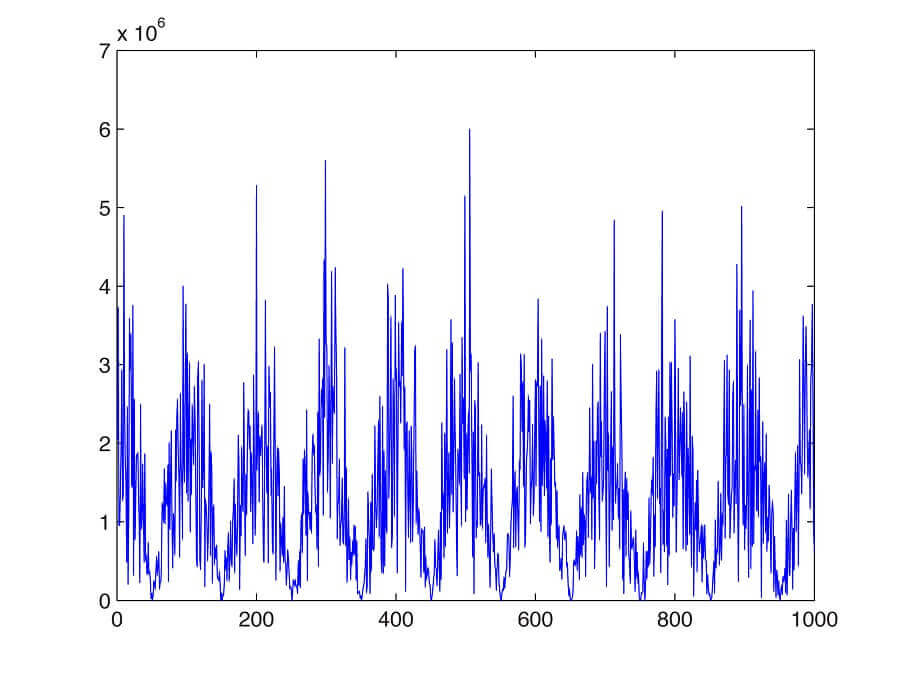
In the realm of acoustic hyper-reality we meet aural simulacra of the order of maleficence. These are signals that mask and denature a profound acoustic reality. They are referential and representational, but in a way that they dissimulate reality and become its twisted Doppelgängers. Simulacra of the order of maleficence are perversions of reality. With the sound artwork ‘Natural Perversion’ Through a set of sonic processes the artist delves into autogenerative, autopoietic, responsive and biomimetic modes of creation exploring how the original naturally produced audio signal can be transformed into a sonic caricature and depending on the way it balances between its signifier and its signified aspect, it may re-interpret naturally produced concrete audible events into a musical language which serves both the acousmatic and the non-cochlear approaches to contemporary sound art.
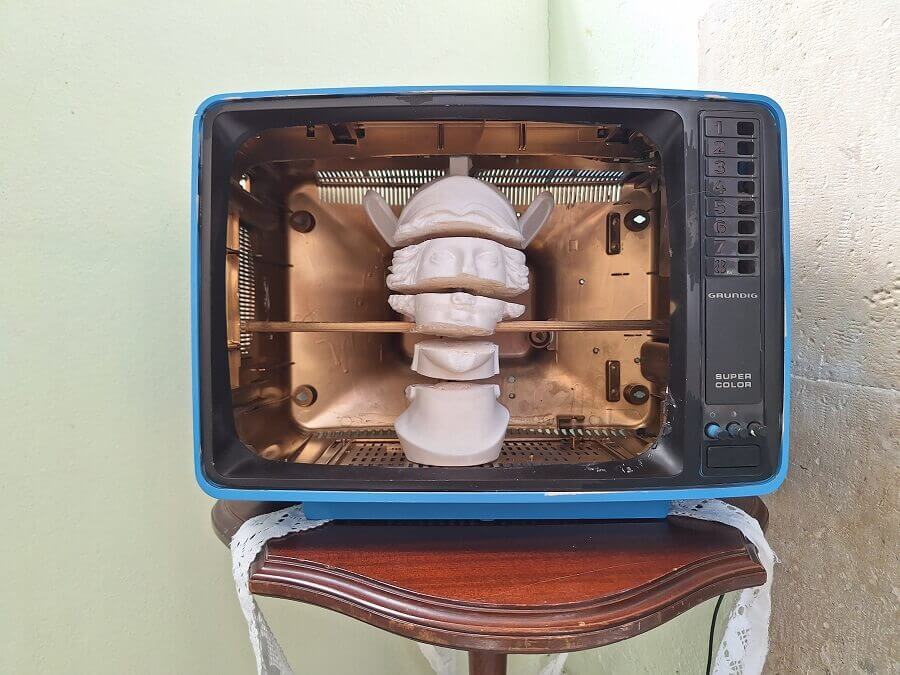
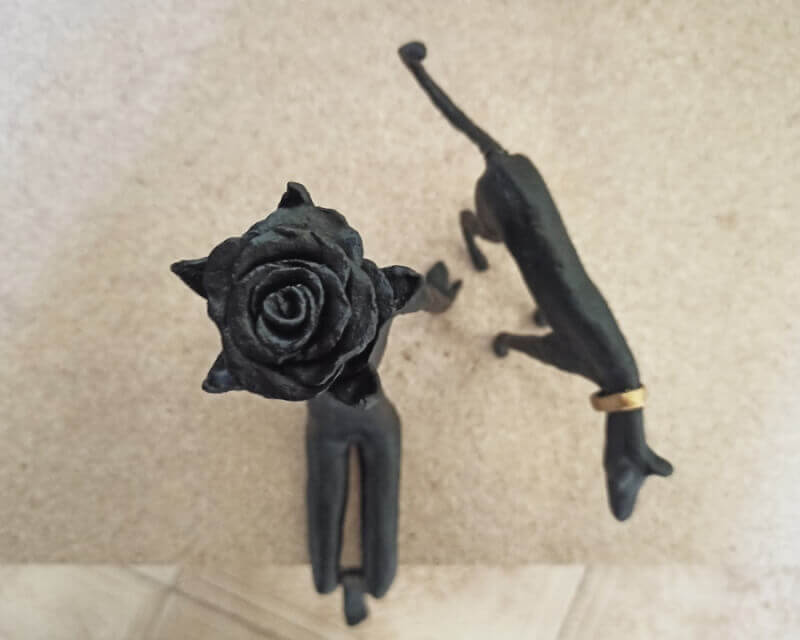
The subject of Charis Myrsilidi’s thesis concerns the transfer of literary text to image. The excerpts of the selected texts are stories from the Grimm brothers' fairy tales and the connecting link is the pattern of transformation (metamorphosis). The presentation of the practical part of the thesis concerns an installation with clay sculptures, sound track and lighting. The sculptural space is formed by Charis Myrsilidi, a student of the Department of Audio Visual Arts and the sound by the composer Ioannis Konsolakis.
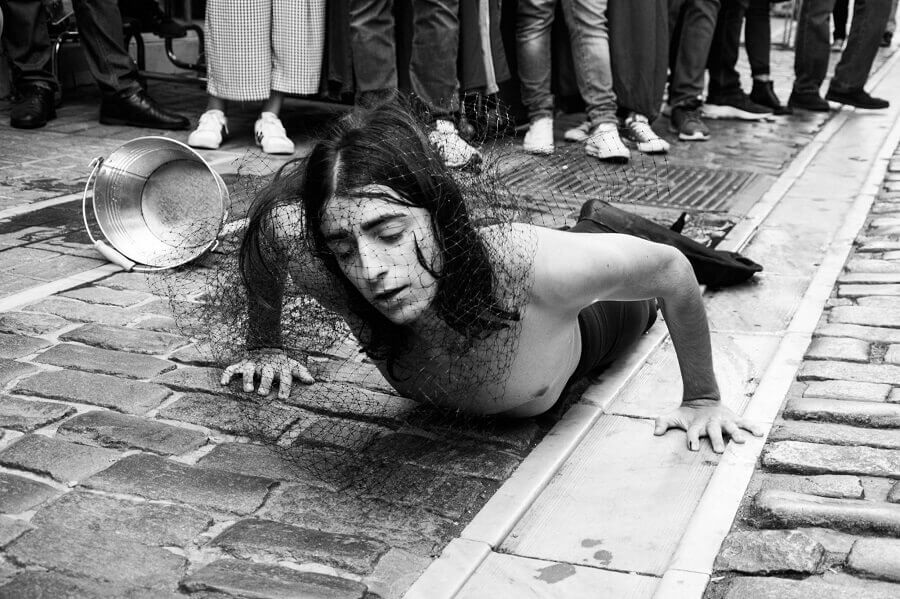
The cinematic portrait of a visual artist, Demetris Papazachos, a senior student of the Fine Arts School in Thessaloniki, is about featuring an artist without just showing his artwork but emphasizing at his personality and his artistic thinking instead. Through his internal journey, gay culture elements are projected while an interesting question is raised: Who is "A Visual Artist" at last?
Α creative dynamic dialogue with artificial intelligence (ai). The cursor is about to press "generate". Analyzing.

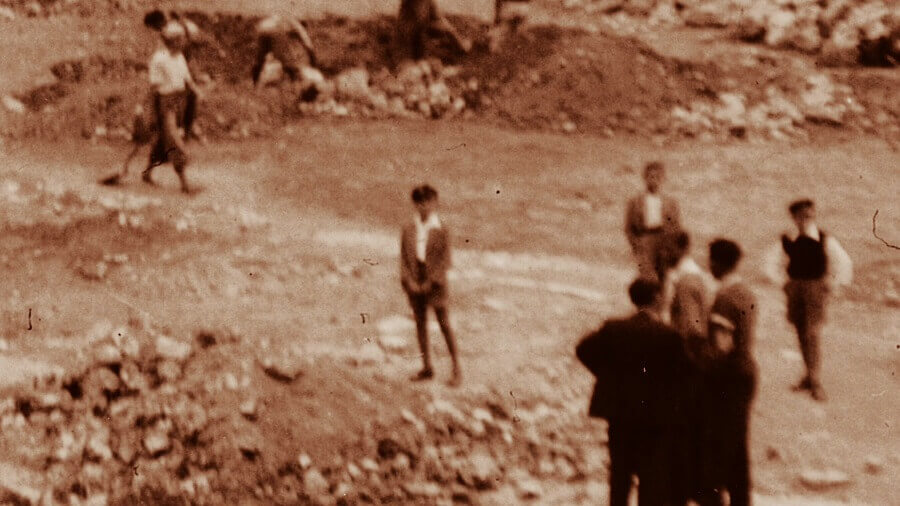
A documentary about Lazaretto, the desert islet near the city of Corfu that functioned for centuries as a quarantine station as well as a place of execution for political prisoners during the Greek Civil War. The identity of the place is approached through fragmentary testimonies and original sources.
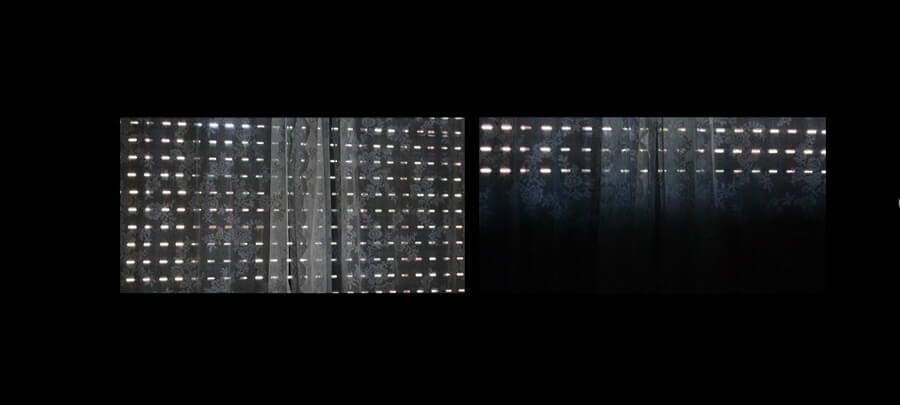
This changing frame represents an allegorical image of human nature, which when it is in dialectic with the outside world - during the transition from private to public life, experiences conflicting feelings of apprehension, anticipation, reticence, curiosity and extroversion.
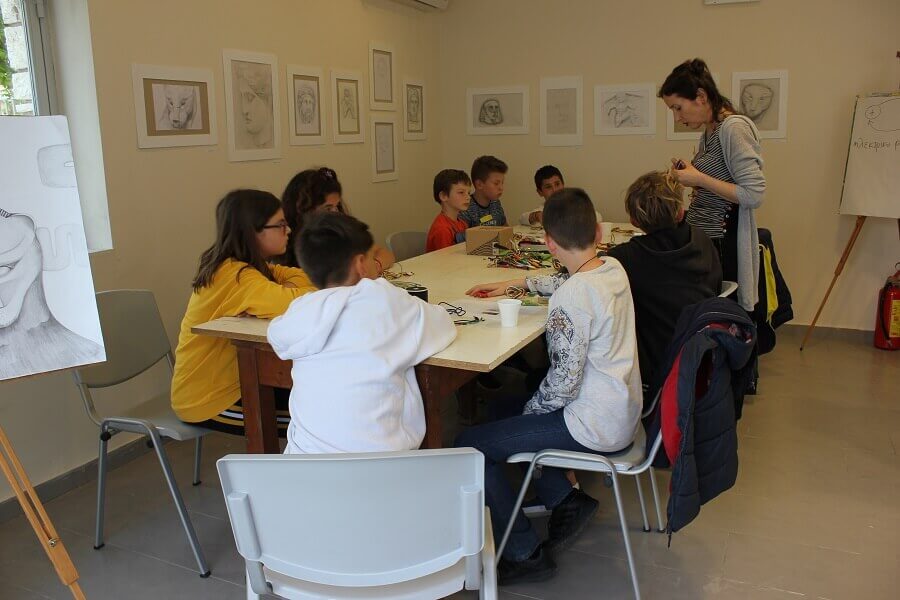
An experimental workshop was realized at the Corfu Archaeological Museum, on May 2019. The workshop was designed within the frames of interdisciplinary learning and participatory art, based on Maker culture and STEAM education, willing to highlight the importance of arts and technology in learning. The participants, children and adolescents 11 to 15 years old, were initially guided to an important archaic find at the Archaeological museum of Corfu, a pediment depicting ancient Greek goddess Artemis-Gorgo, and got acquainted with the myth surrounding it. In two groups the participants made
1. electronic circuits which produced sounds via photo resistor and conductive paint and
2. conductive drawings inspired by the archaic pediment imagery.
The two groups combined their work to create interactive installations were circuits and sensors were used to “read” the tonal variations and line elements of the pencil drawings. Documentation indicates the childrens’ immersion into the experience.
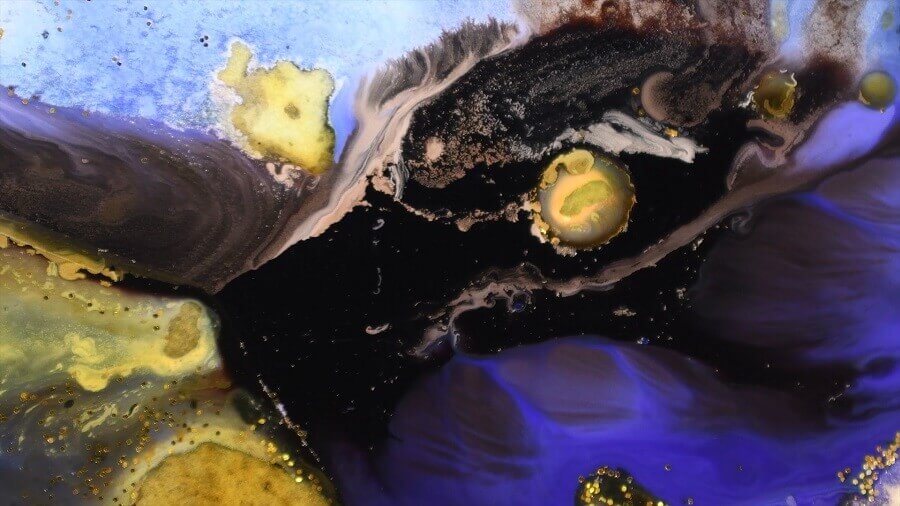
"Dharmadhatu" is an experimental audiovisual video with linear narrative. It has been created with an original experimental technique, where each frame results from a live recording of the behavior of flowing colors on a painted surface.