

The chained elephant
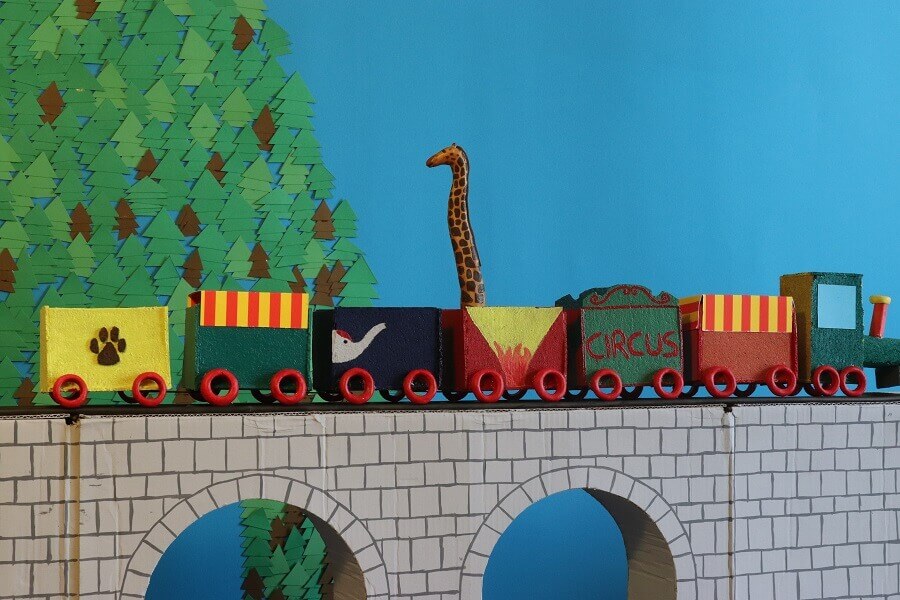
The project is the animation of the fairy tale "The chained elephant". "The Chained Elephant" is one of the stories of psychiatrist Jorge Bukay from his book "Let me tell you a story" which he tells to his client. It refers to a child' s question who notices that a huge circus elephant remains tied to a small stick without trying to free itself and without protesting. The circus elephant remained tied to his tiny stick because "the memory of the weakness he felt shortly after his birth is etched in his memory."
Direction and animation: Papa Alkistis, Music and composition: Nicky Kokkoli, Sound engineer: Chrysanthi Matsagka
Related Works
The present postgraduate thesis was prepared in the context of the completion of the postgraduate program of the Department of Sound and Visual Arts of the Ionian University.
The study of the subject will be the facts and data on the occasion of the completion of 200 years since the Greek Revolution.
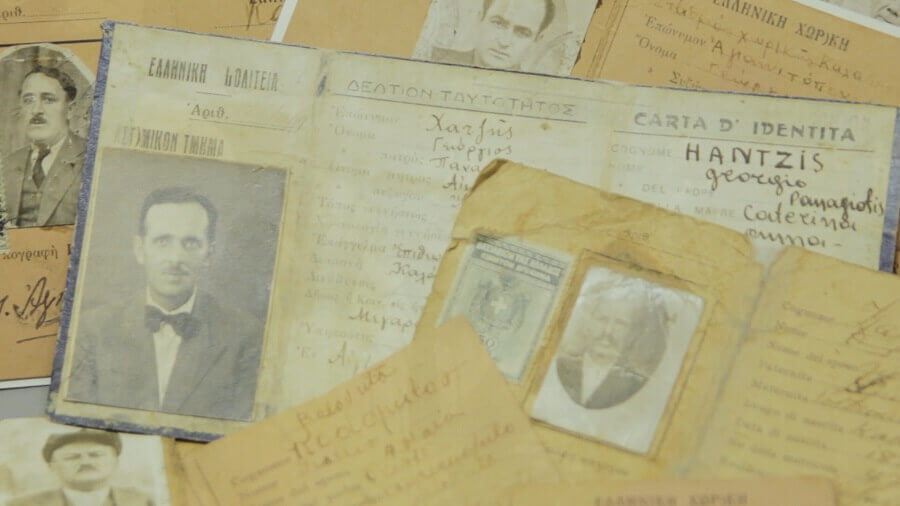
The present work aims to enrich the theoretical framework of study. Its structure is based on data that I have collected (rare photographic material, letters, etc.), from the Public Archives of the State, the Kapodistrias Museum and the Reading Company.
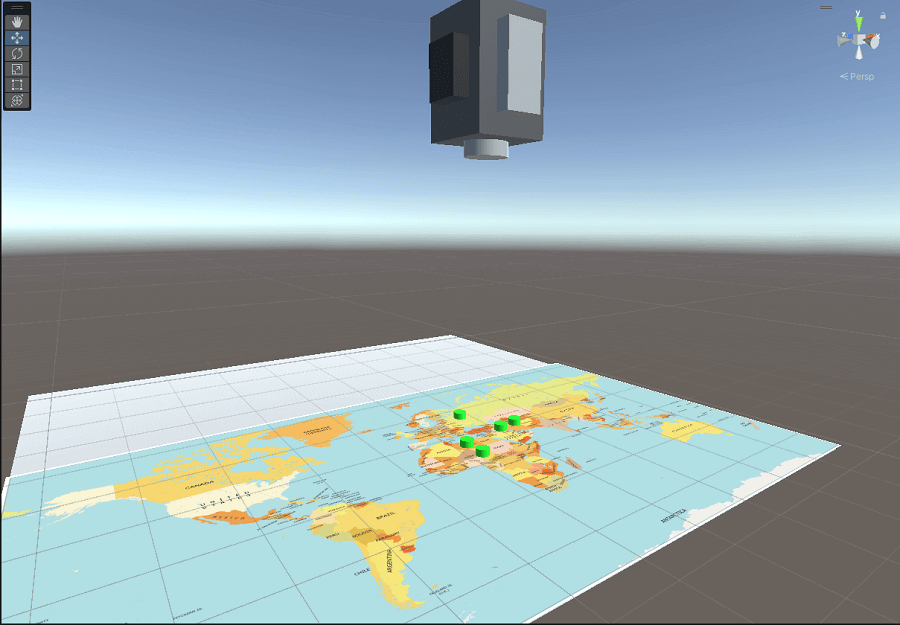
It is an Interactive Installation that deals with the issues of immigration, wars and surveillance of citizens on a global scale.
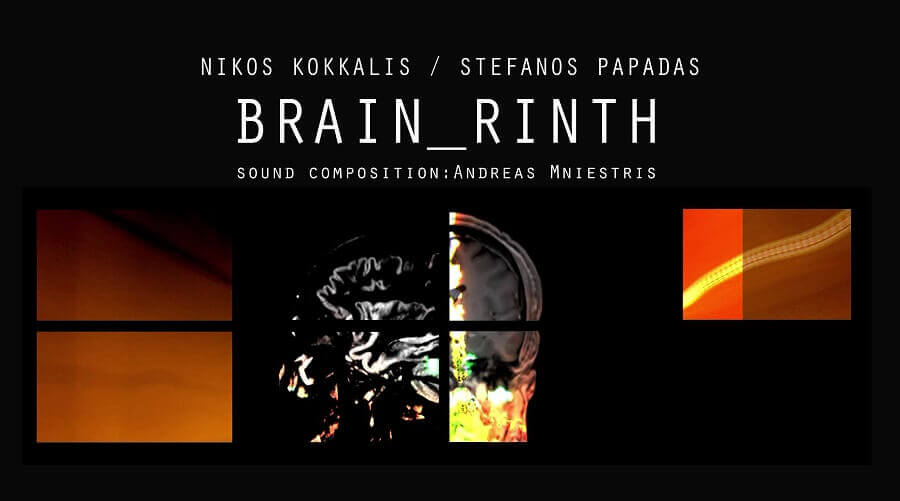
BRAINRINTH is a multi-channel video installation. The work attempts – through technology – to approach brain-related functions of memory, drawing on material from personal experience of the body in crisis. The title BRAINRINTH –from the words Brain and Labyrinth – is a play on the intractable riddle of an archetypal Greek structure (the labyrinth) and the labyrinthine processes of the human brain. The BRAINRINTH installation seeks a poetic mapping of the human brain.
Due to the shock of trauma, our understanding of the functioning of the body, and of nature itself –which we are trying to dominate – seems desperate and full of anxiety. Taking this into account, if we adopt a position in which we keep a distance of aesthetic neutrality, perhaps this reality begins to look less frightening.
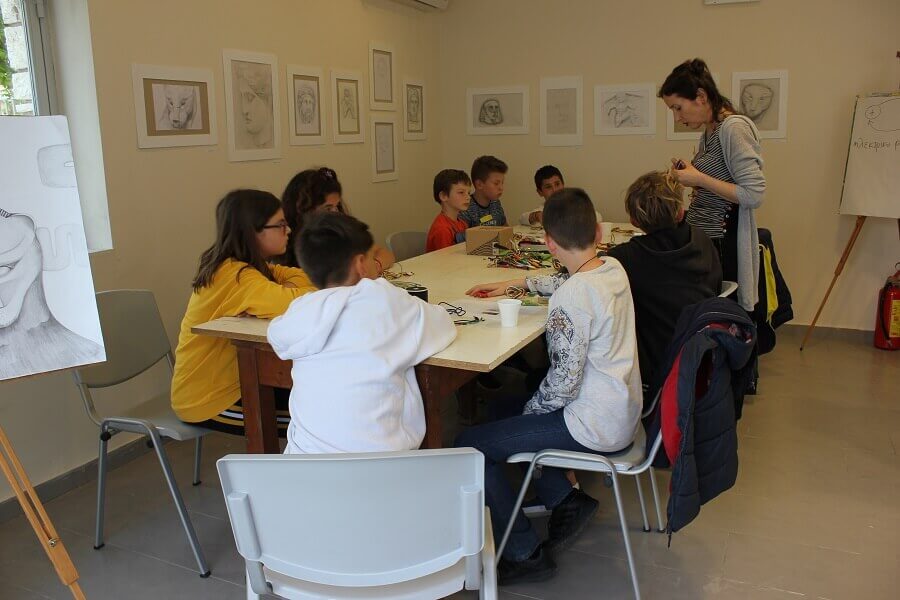
An experimental workshop was realized at the Corfu Archaeological Museum, on May 2019. The workshop was designed within the frames of interdisciplinary learning and participatory art, based on Maker culture and STEAM education, willing to highlight the importance of arts and technology in learning. The participants, children and adolescents 11 to 15 years old, were initially guided to an important archaic find at the Archaeological museum of Corfu, a pediment depicting ancient Greek goddess Artemis-Gorgo, and got acquainted with the myth surrounding it. In two groups the participants made
1. electronic circuits which produced sounds via photo resistor and conductive paint and
2. conductive drawings inspired by the archaic pediment imagery.
The two groups combined their work to create interactive installations were circuits and sensors were used to “read” the tonal variations and line elements of the pencil drawings. Documentation indicates the childrens’ immersion into the experience.
It is a work of digital design in real time that in its evolution displays the Word human, relationship coupling, thoughts and feelings..
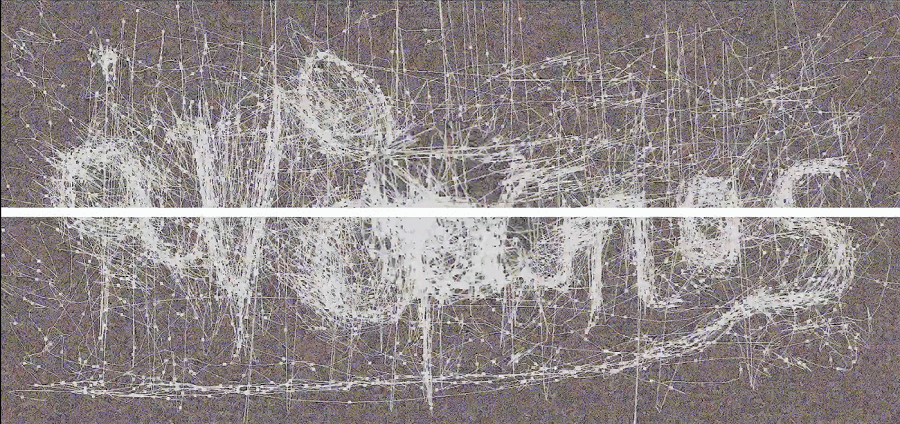
The quarantine's experience time has functioned as a humanized time. Its previous social barbarity was imprisoned in the familiar cage of my soul and became my creation time. Each day was my friend, an eternal circular and dynamic present, a consciousness without conflicts. It was like an eternity that is experienced differently every moment. An unprecedented form of stillness gripped me and perpetuated in many abstract fragments which finally formed the new texture of my existence, in this peculiar isolation. I became from the carcass of time I was before, its qualitative disintegration… Reality was distorted and experienced illusively. The time from the alienation that was before, was transformed and became the cover for the scratched truth of myself. This kind of time my conscience had dreamed to live.
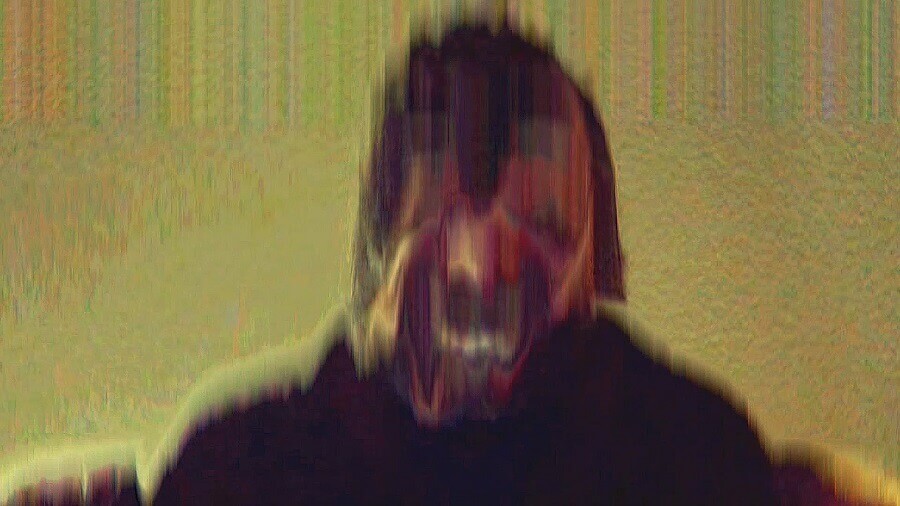
It’s Monday, the 13th of December 1943, the small town of Kalavryta is set on fire by the occupation army of Nazi Germany while the entire male population is being gathered on a nearby hill and shot dead. This war crime will go down in history, along with the massacre of Acqui Division, as the largest mass killing in Greece during WWII. Three men who witnessed these events as kids, locked up with the rest women, children and elderly people in Kalavryta’s primary school, recall this traumatic experience.