
Related Works
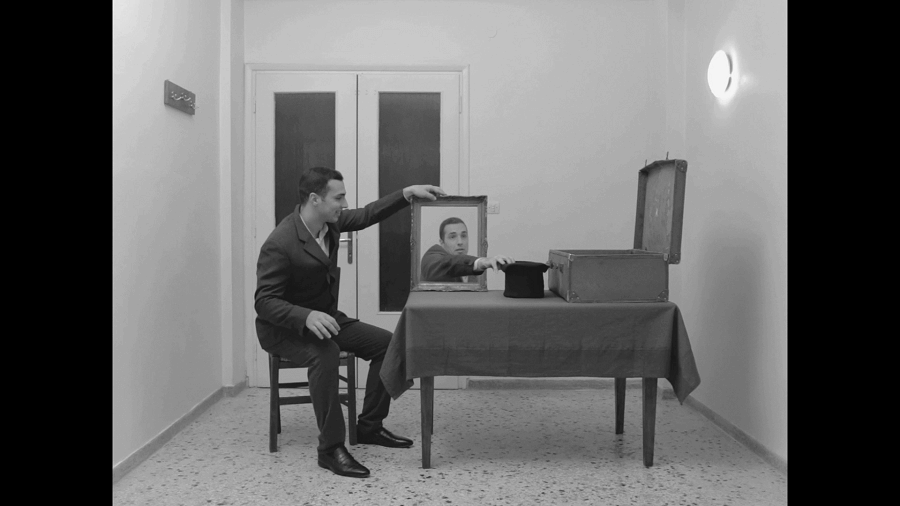
Where do memories go when they are lost? Are they still where we left them, if we don’t recall them? In this room, as private and irrevocable as our memory, objects animate a series of scenarios. A memory floods the room, another struggles to disclose itself, another one leaks back and forth in time. The idea of the ‘other’ hovers between what has already passed and what is reminisced every time. We never recollect events and spaces as such. We always enliven recollections in our own way. Through constant evocations that seek to perpetuate the existence of the ‘room’, memories converse with space and time, as well as with a part of ourselves. Either as past, forgetfulness or loss, they always contain something that is already gone.
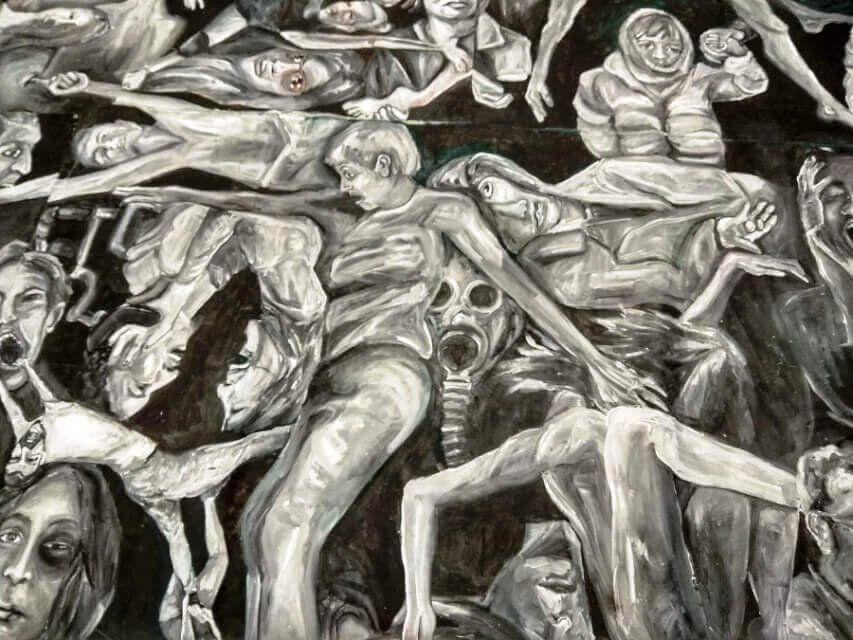
BRAINRINTH is a multi-channel video installation. The work attempts – through technology – to approach brain-related functions of memory, drawing on material from personal experience of the body in crisis. The title BRAINRINTH –from the words Brain and Labyrinth – is a play on the intractable riddle of an archetypal Greek structure (the labyrinth) and the labyrinthine processes of the human brain. The BRAINRINTH installation seeks a poetic mapping of the human brain.
Due to the shock of trauma, our understanding of the functioning of the body, and of nature itself –which we are trying to dominate – seems desperate and full of anxiety. Taking this into account, if we adopt a position in which we keep a distance of aesthetic neutrality, perhaps this reality begins to look less frightening.
When the observer is standing in front of a work of art and is trying to comprehend it, they are consciously entering a recognition process. This is achieved because the brain recognizes the relationship between some shapes or colors in the piece of art and, automatically, recalls them from memory. This procedure creates the necessary conditions for the creation of new neural synapses. Using these facts?, the artist suggests an audiovisual performance that includes an interference of audio to the visual aspect? in real time.
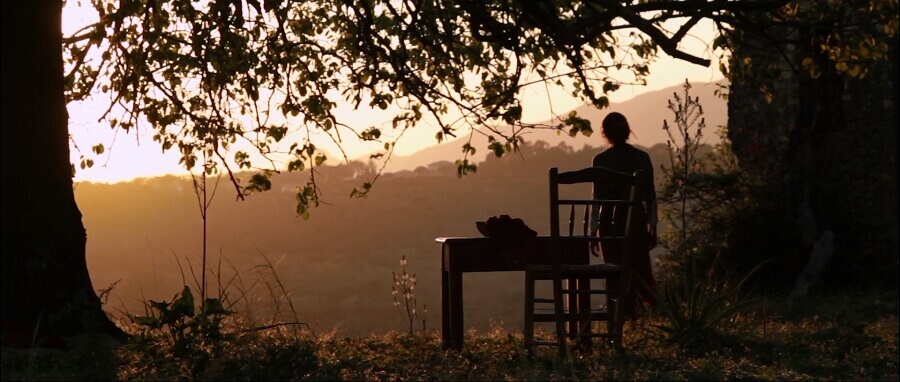
The fulfillment of a last wish leads Filippo to a retrospection from the mountains of Epirus to the recent past of the year 1945. His meeting with his history revives the memory of a whole village, unfolding the relations and the bonding of two peoples against the commands of an era, which is not as far as we think.
Moments that meet and compose new ones through clips of a few seconds. Their common point is the associative thinking during their creation and the sense of the surrealistic-dreamlike mood.
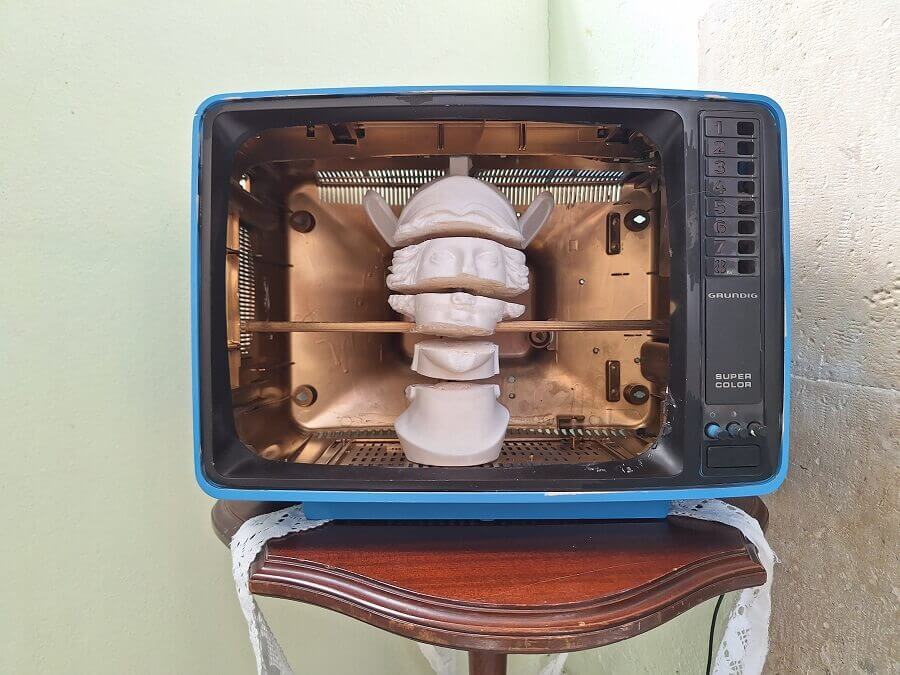
The subject of Charis Myrsilidi’s thesis concerns the transfer of literary text to image. The excerpts of the selected texts are stories from the Grimm brothers' fairy tales and the connecting link is the pattern of transformation (metamorphosis). The presentation of the practical part of the thesis concerns an installation with clay sculptures, sound track and lighting. The sculptural space is formed by Charis Myrsilidi, a student of the Department of Audio Visual Arts and the sound by the composer Ioannis Konsolakis.
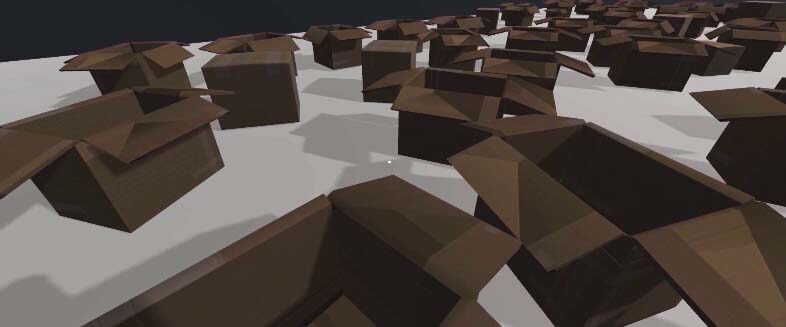
The video is a documentation of a spatial installation with a dual role, through viewing / observation and participation. The investigation of the relationship that develops between digital and real space, acting in it, as the main axis of the narrative, the human being is the framework of the research with object of study the concept of metaphor to the coexistence of experience as a narrative and of the experience of the present as a fact of performance. The real environment through recording projected into an analog painting and transferred to a digital environment (images-video- video projection) connecting the real, the digital and painting form. Respectively, the natural environment of the installation transferred to the projection surface, in a digital space, via the camera and projector.
The research documentary A Quest for Eternity (2020) focuses in four different elements of Angelopoulos’s style and provides new information using and analysing the data from semi-structured interviews. This research documentary is part of Dr. Iakovos Panagopoulos practice based Phd research in the University of Central Lancashire with the title: “Reshaping Contemporary Greek Cinema Through a Re-evaluation of the Historical and Political Perspective of Theo Angelopoulos's Work”(Panagopoulos, 2019).
The short documentary focuses on the preparation of the solo performance "EVA", performed by the dancer and performer Evangelia Randou. The project is based on her personal experiences and has been created and staged by her. The film reveals the moments when the dancer works with her body, experiments, creates and improvises. The documentary is a portrait of the dancer herself, but also of the work she creates.