
EX-SITU [existing situations]. Destruction as an social-artistic practice.
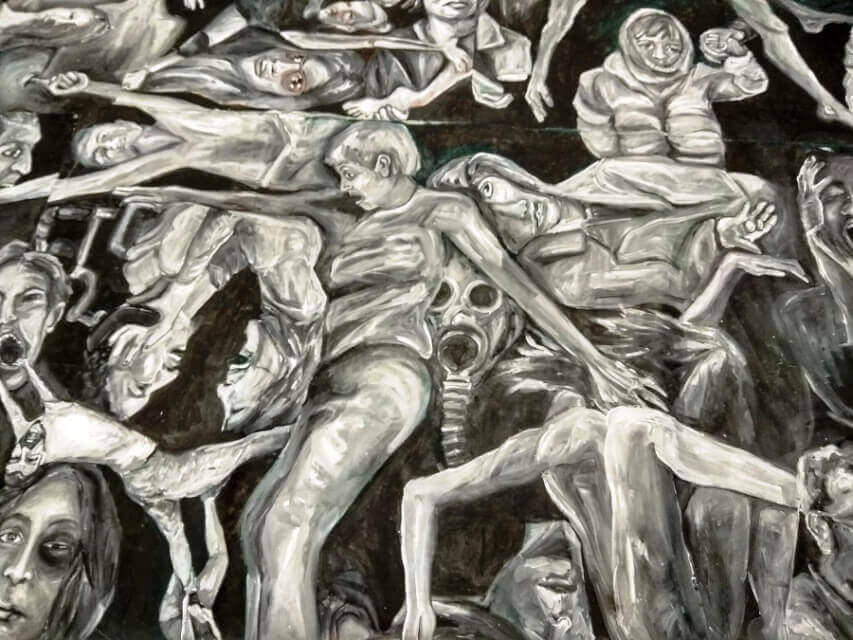
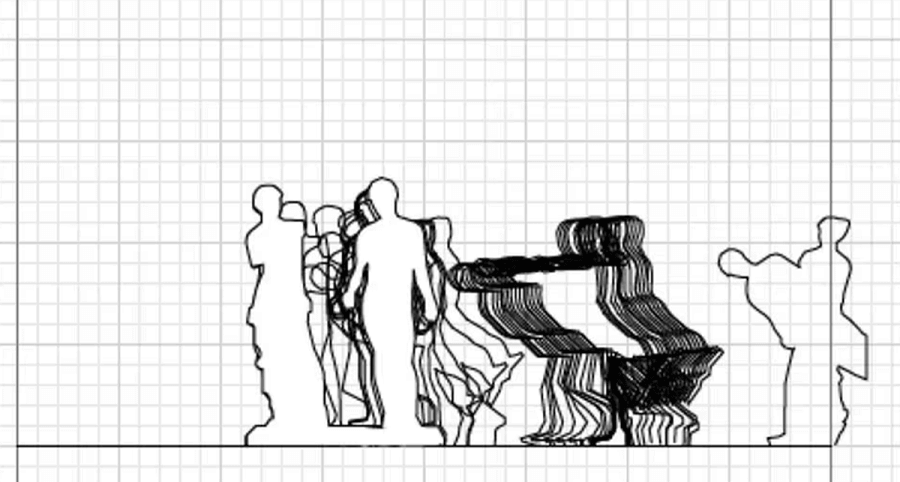
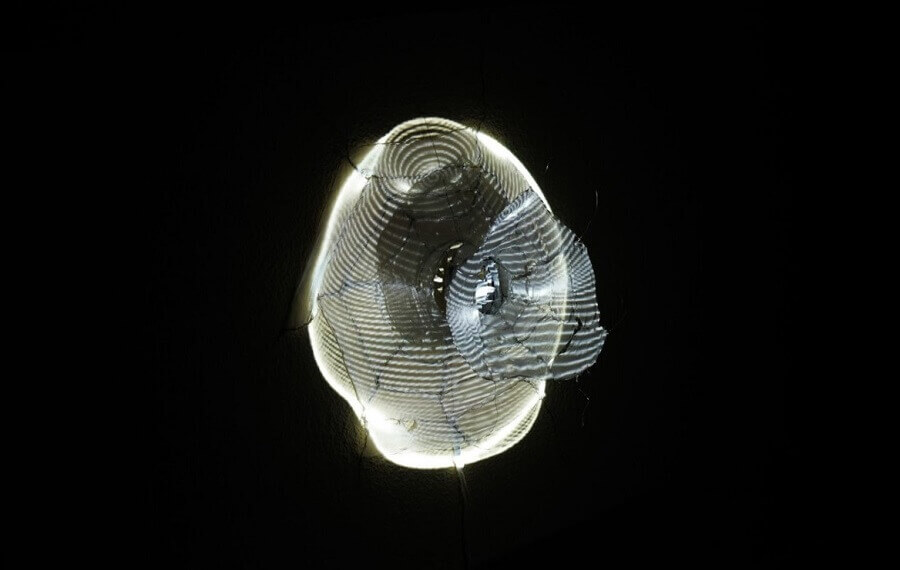
EX-SITU[existing situations] is an interactive installation that incorporates a computer, sound, and lighting technologies in which users/ viewers take part in the destruction of the painting by stepping on it. At the same time, a motion tracking system marks visitors and a light spot tracks them.
The content of EX SITU calls for awareness of social indifference, self-promotion, and their impact on society. The structure of EX SITU is intentionally ambiguous, revealing the obsession/fascination for the protection of material in contrast with the empathy for other people.
The interactive installation underlines the responsibility of individuals in society. The theoretical part analyses the Destruction in Art Symposium in 1966 and The bystander effect, or bystander apathy, in which individuals are less likely to offer help to a victim when other people are present.
Developer: Kostas Tsioutas
Related Works
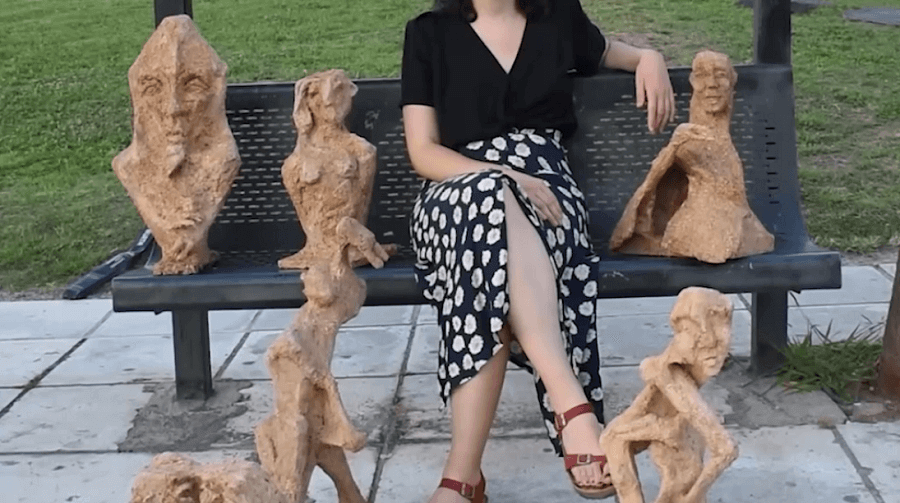
Α thought upon all the things we don't listen to, until we can't but listen. Αη animation featuring a creature balancing over the words that are haunting her.
The compositional method is based on the incorporation of sound material of cultural background into an electroacoustic piece. By drawing a linear narration, my aim was to demonstrate a unity, an imaginary community, which characterizes the Romani culture, despite the hybridic, complicated and diverse traditions deriving from the various European and Asian countries its people live in. A central question behind the making of this piece is what kind of role can a civilization have today, when the concept of space is eliminated by time- a key element in the dynamics of capitalism. What are the cultural consequences of the so-called annihilation of time and space, as materialized and tangible dimensions of social life? Are historical tradition and the search for roots promoted and reorganized as simulacra, imitations or/and museum culture, thourgh the demonstration of a partly deceptive past?
Myths are living stories that grow with time, change, adapt, but continue being a source for research, inspiration and creativity. The interactive audiovisual theatrical performance INRIRI questions the adaptation of an archetypal myth at a time of many dimensions and levels with elements from physical theater and embedded interactive technology in the performing space. Parts of the story are a Caribbean myth which transforms the body, a woodpecker and some new experimental technologies. On stage two bodies try to communicate with themselves and the environment around them and to discover anew what a body can be, what the relation and connection with the other body and which are the influences of the surrounding space on them.
Moments that meet and compose new ones through clips of a few seconds. Their common point is the associative thinking during their creation and the sense of the surrealistic-dreamlike mood.
The video is a documentation of a spatial installation with a dual role, through viewing / observation and participation. The investigation of the relationship that develops between digital and real space, acting in it, as the main axis of the narrative, the human being is the framework of the research with object of study the concept of metaphor to the coexistence of experience as a narrative and of the experience of the present as a fact of performance. The real environment through recording projected into an analog painting and transferred to a digital environment (images-video- video projection) connecting the real, the digital and painting form. Respectively, the natural environment of the installation transferred to the projection surface, in a digital space, via the camera and projector.
Zoe is a 25 year-old student, living in Corfu island, Greece with her only friend and roommate Anne. Waking up late an afternoon Zoe realises that her friend is missing and she goes out at night alone in search of her. The strangely empty and quiet town, a series of bizzare events and the sense that she's been followed gives her the realization that something strange is going on and her eager to find her friend grows stronger.
At that time she comes across a dark human figure that wants to capture her. Trying to escape, Zoe ends up in a white room with nothing but a mirror inside.
As she walks closer to the mirror she sees that someone is trapped inside a room. Thinking that it's her friend Anne she reaches and goes through the mirror into that other room.
As she sits down next to the other person, thinking that she is Anne, she realizes it's her own self. In a desperate and decisive moment she tries to save her double, only to realize that her double can not cross to the other side of the mirror. Realizing that there's no way out the double lets go of Zoes hand.
Zoe wakes up in her room in the morning, gets dressed and goes for a walk by the sea in the now fully alive and noisy town. As she stands and stares at the waves she meets a girl named Anne sitting nearby. After the two girls meet they sit by the sea talking.
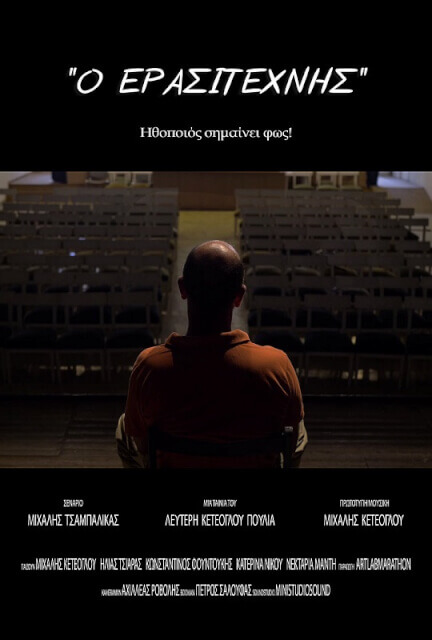
A professional electrician works in the villa of the rich professional actor. The electrician is also an amateur theater actor. The love of the amateur actor seems to be greater than the famous actor. The famous actor tries to make money but the amateur tries to do what he loves.
The short documentary focuses on the preparation of the solo performance "EVA", performed by the dancer and performer Evangelia Randou. The project is based on her personal experiences and has been created and staged by her. The film reveals the moments when the dancer works with her body, experiments, creates and improvises. The documentary is a portrait of the dancer herself, but also of the work she creates.